The obesity treatment landscape continues to evolve rapidly, and few investigational therapies have generated as much excitement as Retatrutide. Developed by Eli Lilly and Company, Retatrutide is a first-in-class triple hormone receptor agonist targeting GLP-1, GIP, and glucagon receptors simultaneously.
Following impressive Phase 2 results, Retatrutide has now entered the spotlight with multiple successful Phase 3 clinical trial readouts. Early data suggest the compound may deliver levels of weight loss previously associated only with bariatric surgery, potentially setting a new benchmark for obesity treatment.
What Makes Retatrutide Different?
Most currently approved obesity medications target one or two metabolic pathways. Semaglutide targets GLP-1 receptors, while Tirzepatide targets both GLP-1 and GIP receptors.
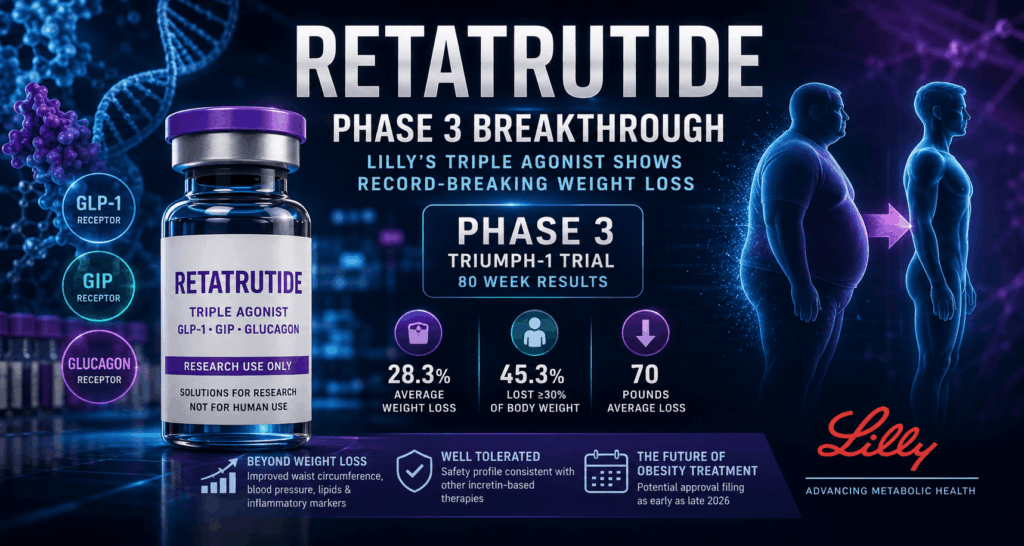
Retatrutide adds a third mechanism by activating glucagon receptors alongside GLP-1 and GIP. Researchers believe this additional glucagon activity may increase energy expenditure while maintaining appetite suppression and metabolic benefits. This unique “Triple G” approach is considered one reason the drug has demonstrated unprecedented weight-loss results.
Latest Phase 3 Results: TRIUMPH-1
In May 2026, Lilly announced positive results from the pivotal Phase 3 TRIUMPH-1 trial involving adults with obesity or overweight without diabetes. The study followed participants for 80 weeks and evaluated multiple dosing regimens.
Key Findings
Participants receiving the highest 12 mg weekly dose achieved:
- Average weight loss of 28.3%
- Approximately 70 pounds (31.9 kg) of weight reduction
- 45.3% of participants lost at least 30% of their body weight
- More than 65% of participants achieved a BMI below the obesity threshold (BMI <30) by week 80.
Researchers also reported improvements in several cardiometabolic markers, including:
- Waist circumference
- Triglycerides
- Blood pressure
- Non-HDL cholesterol
- Inflammatory markers such as hs-CRP.
Extended Results Show Continued Weight Loss
One of the most notable findings from the TRIUMPH program was the continued reduction in body weight beyond the primary study period.
Participants with a baseline BMI of 35 or greater who remained on treatment for 104 weeks achieved average weight reductions of approximately 30.3%, equivalent to around 85 pounds lost. These results suggest that Retatrutide’s effects may continue to accumulate over longer treatment durations.
Beyond Weight Loss: Additional Phase 3 Studies
Retatrutide’s development program extends far beyond obesity alone.
Lilly is currently conducting multiple Phase 3 studies evaluating the therapy in:
- Type 2 diabetes
- Cardiovascular outcomes
- Obstructive sleep apnea
- Knee osteoarthritis
- Chronic low back pain
- Metabolic dysfunction-associated steatotic liver disease (MASLD/MASH)
- Chronic kidney disease risk reduction.
Earlier Phase 3 data from the TRANSCEND-T2D-1 trial demonstrated significant reductions in both HbA1c and body weight among patients with type 2 diabetes, suggesting the compound may have broad metabolic applications beyond obesity management.
Safety Profile
The safety profile observed in Phase 3 trials appears generally consistent with other incretin-based therapies.
The most commonly reported adverse events included:
- Nausea
- Vomiting
- Diarrhea
- Constipation
- Gastrointestinal discomfort
These effects were generally dose-dependent and occurred most frequently during dose escalation periods. Some participants discontinued treatment due to adverse events, particularly at the highest dose levels.
Researchers continue to monitor long-term safety outcomes as additional Phase 3 studies progress.
How Does Retatrutide Compare to Existing Treatments?
Current evidence suggests Retatrutide may produce greater average weight loss than currently approved therapies such as Wegovy (Semaglutide) and Zepbound (Tirzepatide).
While cross-trial comparisons should always be interpreted cautiously, the approximately 28% weight reduction reported in Phase 3 obesity trials represents one of the largest weight-loss effects ever observed with a pharmaceutical therapy.
This has led many obesity researchers to describe Retatrutide as a potential next-generation therapy capable of redefining expectations for non-surgical weight management.
When Could Retatrutide Be Approved?
Retatrutide remains an investigational drug and has not yet received FDA approval.
Following successful Phase 3 readouts, Lilly is expected to continue gathering data from remaining studies before submitting regulatory applications. Industry analysts anticipate a potential regulatory filing as early as late 2026, with approval decisions potentially occurring in 2027 depending on trial outcomes and regulatory review timelines.
Final Thoughts
The latest Phase 3 results position Retatrutide as one of the most promising obesity therapies currently in development. With average weight reductions approaching or exceeding those traditionally associated with bariatric surgery, the drug may represent a significant advancement in metabolic medicine.
Although additional studies and regulatory review are still required, Retatrutide’s triple-agonist mechanism and impressive clinical outcomes suggest it could become one of the most impactful therapies in obesity and metabolic disease treatment over the coming years.
As the remaining Phase 3 trials report results throughout 2026, researchers, clinicians, and patients alike will be watching closely to see whether Retatrutide can fulfill its considerable promise.