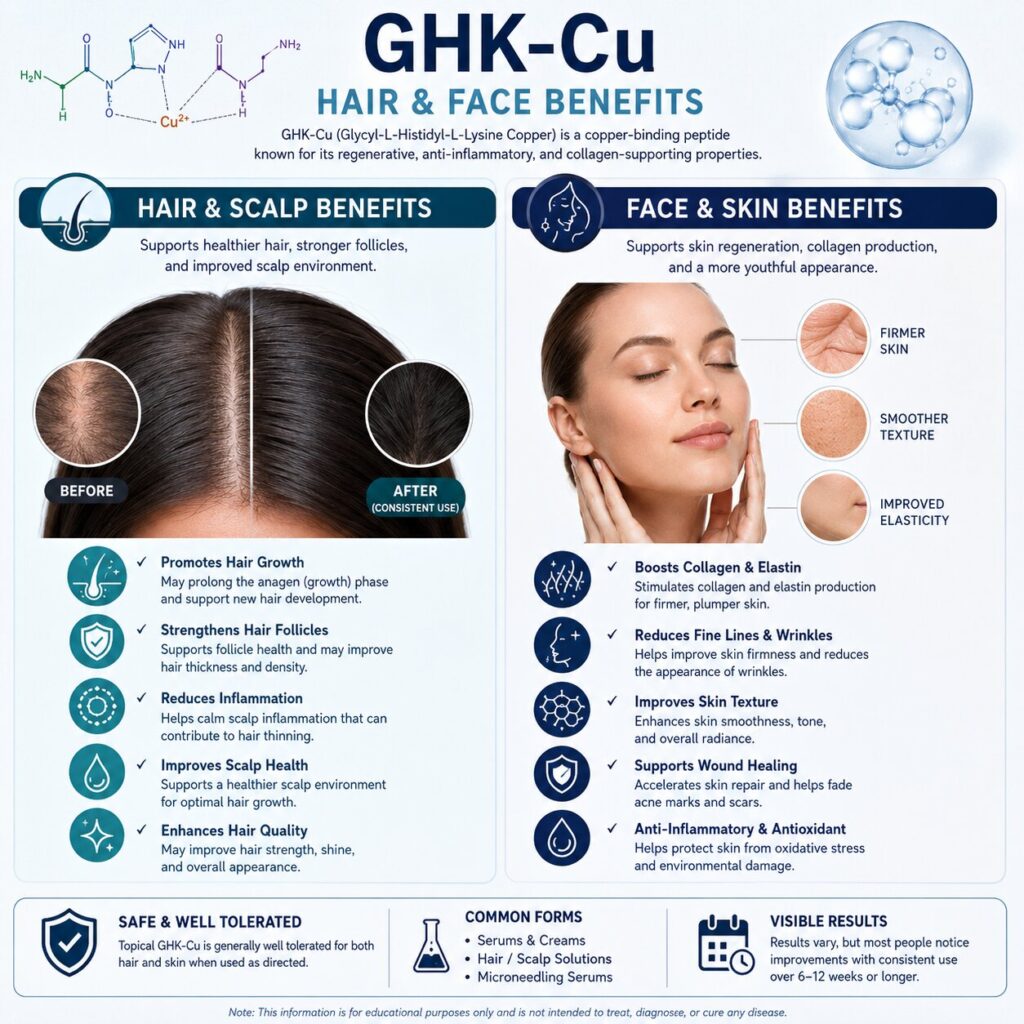
GHK-Cu is a copper-binding peptide formed when the tripeptide GHK (glycyl-L-histidyl-L-lysine) binds to copper ions (Cu²⁺). It has been widely studied for its potential biological effects, including collagen production, antioxidant activity, anti-inflammatory properties, and support for tissue repair. Researchers have also explored its possible role in stimulating and supporting hair follicle growth.
Some studies suggest that GHK-Cu may help reduce the formation of DHT within hair follicles. The enzyme 5-alpha reductase (5-AR), which converts testosterone into DHT, exists in two primary forms: Type 1, associated mainly with hair follicles and skin, and Type 2, associated largely with prostate tissue. Medications such as Finasteride are known to inhibit 5-AR activity, particularly the Type 2 form, which may help manage prostate enlargement and hair loss. Research has suggested that copper ions may more effectively inhibit Type 1 5-AR activity within skin cells, potentially helping reduce follicular damage linked to DHT. Some findings indicate copper ions may significantly suppress Type 1 5-AR activity, while showing less effect on the Type 2 form. Based on these observations, researchers have hypothesized that copper-associated compounds such as GHK-Cu may selectively influence 5-AR activity in hair follicles.
Iron Toxicity and GHK-Cu
Following excessive caloric intake, iron levels in the body may rise and saturate transferrin, increasing the amount of free iron circulating in the bloodstream. Free iron can be toxic to tissues and organs due to its ability to promote oxidative stress. Ferritin, the body’s iron-storage protein, can store thousands of iron atoms and may contribute to lipid peroxidation, generating free radicals that can damage cellular membranes, proteins, and DNA.
Research has suggested that GHK-Cu may help reduce iron-related oxidative stress. Free iron accumulation inside cells, particularly within mitochondria, may disrupt oxidative phosphorylation and accelerate free radical formation, potentially leading to cellular injury or death. By influencing oxidative pathways, GHK-Cu has been investigated for its possible protective effects against iron-induced cellular damage.
Cell Proliferation and Tissue Repair
Studies have indicated that GHK may influence cellular signaling pathways associated with tissue repair and cell survival. Research suggests GHK may downregulate miR-339-5p expression, which could play a role in reducing apoptosis (programmed cell death). Some findings indicate that overexpression of miR-339-5p may partially reverse the anti-apoptotic effects associated with GHK.
Researchers have also proposed that the effects of GHK on miR-339-5p may involve the p38 MAPK signaling pathway. Additionally, the miR-339-5p/VEGFA pathway has been studied for its potential involvement in protecting neurons following intracerebral hemorrhage (ICH)-related injury. These findings have led scientists to further investigate GHK-Cu’s potential role in cellular regeneration and tissue recovery.
GHK-Cu and Inflammation Research
GHK naturally occurs in human plasma, saliva, and urine, where it readily binds with copper ions and may help regulate copper metabolism. The GHK-Cu complex has been investigated for potential wound-healing, regenerative, antioxidant, and anti-inflammatory properties.
Research suggests that exposure to GHK-Cu may reduce levels of inflammatory cytokines such as TNF-α and TGF-β, potentially limiting oxidative damage and suppressing inflammatory responses. In animal and in-vitro studies, GHK-Cu exposure has been associated with increased superoxide dismutase activity and reduced reactive oxygen species (ROS) production.
Additional findings indicate that GHK-Cu may decrease the production of inflammatory mediators such as IL-6 and TNF-α through suppression of the p38 MAPK and NF-κB signaling pathways. Some studies also suggest that GHK-Cu may inhibit LPS-induced phosphorylation of NF-κB p65. Due to these observed effects, researchers have explored its possible applications in chronic inflammatory conditions, including inflammatory bowel disease.
Taken together, these findings have led researchers to hypothesize that GHK-Cu may support hair follicle health by reducing inflammation, limiting oxidative and iron-related stress, and promoting cellular repair and circulation around the follicle environment.
Disclaimer: The compounds discussed are intended strictly for laboratory research and in-vitro experimentation. They are not approved for human or animal consumption. Any form of bodily administration may violate applicable laws and regulations. Purchases and handling should be limited to qualified researchers and licensed professionals. The information provided here is intended for educational and informational purposes only.