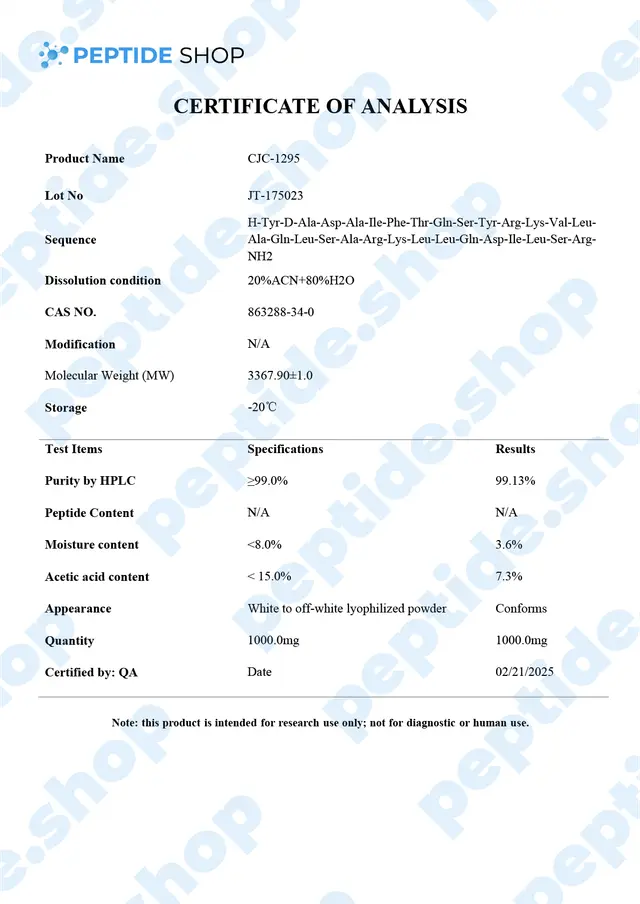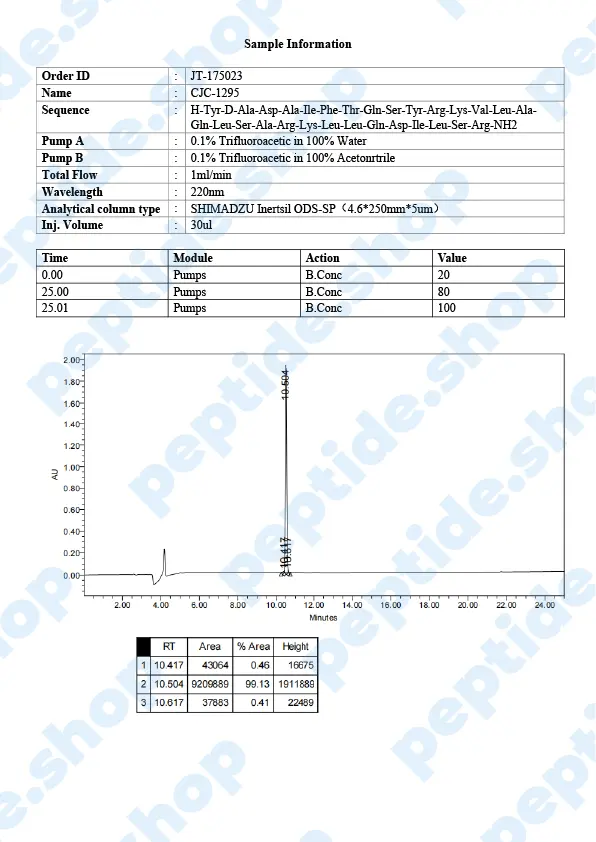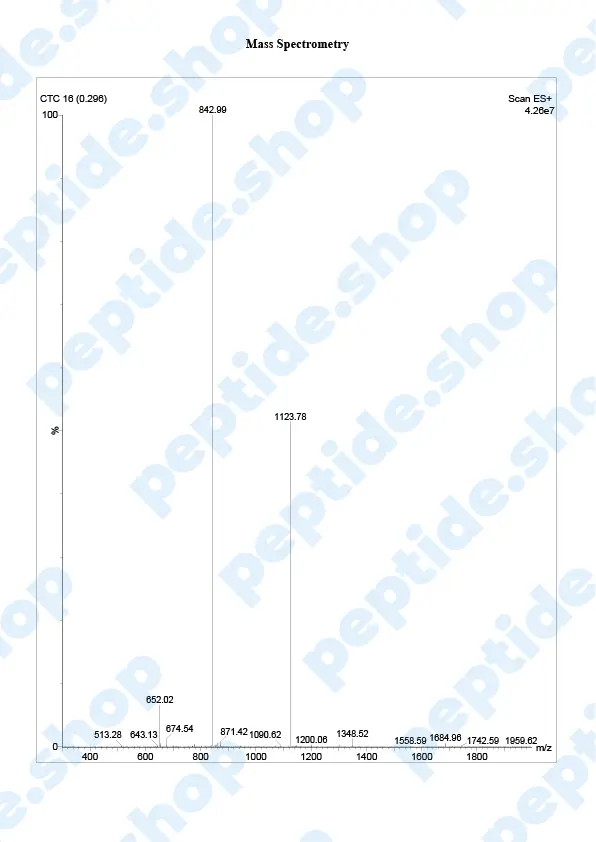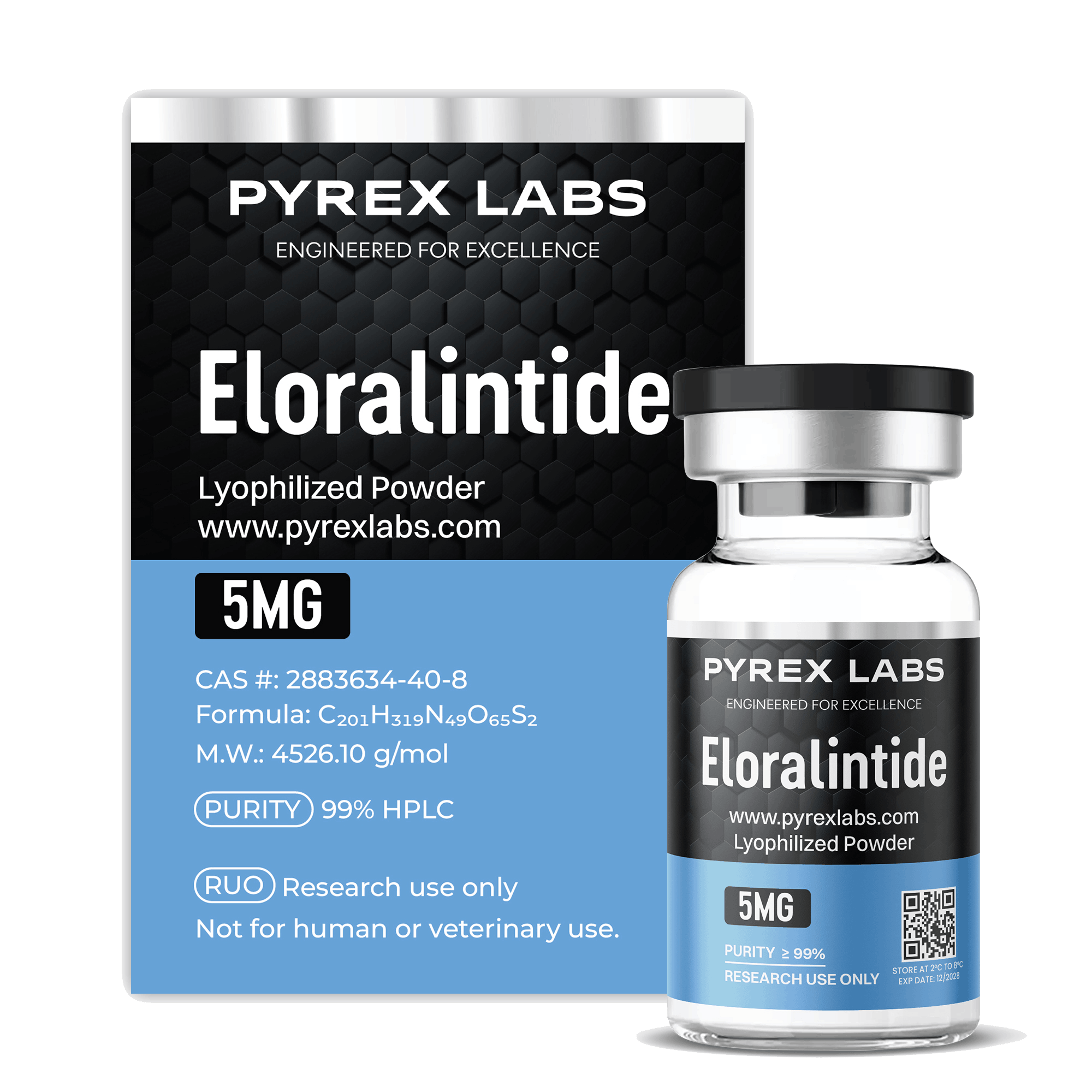
Eloralintide
$99.95
- Buy 5+ of each and save 5%
- Buy 10+ of each and save 8%
- Product is sold in powder form, needs reconstitution before use. Please read more on our FAQ page.
Eloralintide (LY3841136) is a once-weekly selective amylin receptor agonist (AMY1R) for obesity research. Phase 2: 9-20% weight loss at 48 weeks. AMY1R-selective for improved GI tolerability. Best for: obesity, metabolic models, satiety studies, combination therapy. FOR RESEARCH ONLY. NOT FOR HUMAN USE.
SHARE:
SHARE:
- Products sold on our website are designed for in vitro testing and lab experimentation exclusively.
- All the products you see on the website are being sold in a lyophilized powder state (freeze-dried), in a sealed sterile vial; and should be reconstituted.
- The product’s label clearly states the amount of product a vial contains; some products are offered in different variations.
- The products we are selling come in a sealed vial but require additional lab equipment for proper testing.
AVAILABILITY:
- Ships today if you order and pay by 12 PM CST
- Some product may take up to 72 hours to ship
- Backordered items will ship in 3-5 days
Eloralintide (LY3841136) is a novel, once-weekly injectable selective amylin receptor agonist developed for the treatment of obesity. It belongs to an emerging class of amylin-based therapies that leverage the appetite-regulating effects of the native hormone amylin—a peptide co-secreted with insulin in response to nutrient intake that controls gastric emptying, inhibits glucagon secretion, and promotes satiety.
The peptide is a 37-amino acid amylin analog conjugated to a C20 fatty diacid moiety via a linker at the lysine residue at position 26, enabling reversible albumin binding for pharmacokinetic half-life extension. Its structure incorporates several key modifications: a methylene thioacetal bridge replacing the native disulfide bridge for enhanced chemical stability, helix-stabilizing mutations at positions 11, 15, and 22, and a C-terminal proline substitution to prevent amyloid fibril formation—a known issue with native human amylin.
Best for: Obesity research, metabolic disease models, satiety pathway studies, and combination therapy investigations with incretin-based agents.
Key Research Applications
-
Obesity Research: Investigated as a monotherapy for weight management in adults with obesity or overweight with at least one weight-related comorbidity
-
Combination Therapy Studies: Evaluated as an adjunct to incretin-based therapies (including tirzepatide) for patients who do not achieve adequate weight loss targets with GLP-1/GIP-based treatments alone
-
Phase 3 Program (ENLIGHTEN): Multiple global Phase 3 trials initiated in 2025–2026, including studies in patients with and without type 2 diabetes, and as add-on to background incretin therapy
Mechanism of Action
Selective Amylin Receptor Agonism: Eloralintide is designed to mimic the effects of the native hormone amylin by activating amylin receptors (AMYRs). Its key distinguishing feature is its selectivity: eloralintide preferentially activates the human amylin 1 receptor (AMY1R) approximately 12-fold more potently than the human calcitonin receptor (CTR).
| Receptor | Selectivity Profile |
|---|---|
| AMY1R (human) | Primary target (most potent) |
| AMY3R (human) | ~11-fold less potent than AMY1R |
| CTR (human) | ~12-fold less potent than AMY1R |
Data from in vitro cAMP activation assays
Differentiation from Non-Selective Amylin Agonists: This selectivity is a key differentiator from cagrilintide (a non-selective amylin/calcitonin receptor agonist). By focusing activity on AMY1R while minimizing calcitonin receptor engagement, eloralintide aims to deliver therapeutic weight loss with improved gastrointestinal tolerability.
Effects on Food Intake and Body Composition: Preclinical studies demonstrate that eloralintide reduces food intake and lowers body weight, primarily through loss of fat mass rather than lean mass. In head-to-head studies in rats, eloralintide achieved comparable food intake reductions to cagrilintide but without the same degree of conditioned taste avoidance—a preclinical measure of gastrointestinal tolerability. Additionally, eloralintide demonstrated reduced loss of lean mass compared to cagrilintide.
Research Findings
Phase 1 Trial Results: In a Phase 1 single-ascending dose trial (NCT05295940) in healthy participants, eloralintide demonstrated:
-
Mean weight loss at 4 weeks: -2.5% (4 mg dose) and -4.4% (12 mg dose) vs. placebo (+0.6%)
-
Good tolerability: 16 adverse events reported across 9 participants; most were mild (15/16)
-
Gastrointestinal events were limited: only 4 GI events reported, including one moderate vomiting event
-
Pharmacokinetic profile supports once-weekly dosing (half-life approximately 14 days)
Phase 2 Trial (48 Weeks): Results presented at ObesityWeek 2025 and published in The Lancet showed dose-dependent, clinically meaningful weight loss in 263 participants without type 2 diabetes:
| Dose | Mean Weight Loss (%) at 48 Weeks |
|---|---|
| Placebo | -0.4% |
| 1 mg | -9% |
| 3 mg | -12% |
| 6 mg | -18% |
| 9 mg | -20% |
| 6–9 mg (escalation) | -20% |
| 3–9 mg (escalation) | -16% |
Data from Phase 2 trial
Key Secondary Endpoints:
-
Mean waist circumference reduction: up to 17.1 cm
-
Improvements in blood pressure, lipids, glycemic control, and inflammatory biomarkers
Phase 3 Program: Eloralintide has advanced into Phase 3 clinical trials (ENLIGHTEN program) as of late 2025–2026, including:
-
ENLIGHTEN-1: Monotherapy in patients without type 2 diabetes
-
ENLIGHTEN-2: Monotherapy in patients with type 2 diabetes
-
ENLIGHTEN-6: Add-on therapy to background incretin treatment in patients with or without type 2 diabetes (doses: 1.5 mg, 3 mg, 6 mg, 9 mg)
Safety Profile
Most Common Adverse Events (Phase 2): The most common adverse events were mild to moderate gastrointestinal symptoms (nausea, diarrhea, vomiting) and fatigue:
| Dose | Nausea Incidence | Fatigue Incidence |
|---|---|---|
| Placebo | 14% | 12% |
| 1 mg | 11% | 0% |
| 3 mg | 13% | 13% |
| 6 mg | 64% | 29% |
| 9 mg | 33% | 43% |
| 6–9 mg (escalation) | 54% | 46% |
| 3–9 mg (escalation) | 25% | 21% |
Data from Phase 2 trial
Tolerability Optimization: Slower dose escalation (e.g., 3–9 mg stepwise titration) significantly reduced the incidence of adverse events. The 1 mg and 3 mg continuous arms had GI event rates comparable to placebo.
Comparison: Eloralintide vs. Cagrilintide
| Feature | Eloralintide | Cagrilintide |
|---|---|---|
| Receptor Selectivity | Selective (AMY1R > CTR) | Non-selective |
| GI Tolerability (Preclinical) | Improved (less conditioned taste avoidance) | Lower |
| Weight Loss (Phase 2/3) | Up to 20% at 48 weeks (monotherapy) | ~11.8% at 68 weeks (monotherapy) |
| Lean Mass Preservation | Better (in rats) | Lower |
| Development Status | Phase 3 (2025–2026) | Phase 3 |
Regulatory Status
FDA Status: Eloralintide is an investigational medication and is not yet FDA-approved for any medical use. Clinical trials are currently ongoing to evaluate its safety and efficacy; submission for regulatory review will depend on the outcomes of ongoing and future trials.
China Approval: In March 2026, eloralintide received approval from China’s CDE to conduct three global Phase 3 clinical studies in China, supporting future registration for weight management and related comorbidities.
Specifications
| Specification | Detail |
|---|---|
| Product | Eloralintide (LY3841136) |
| CAS Number | 2883634-40-8 |
| Molecular Formula | C₂₀₁H₃₁₉N₄₉O₆₅S₂ |
| Molecular Weight | ~4526 Da |
| Amino Acids | 37 residues |
| Half-Life | ~14 days (supports once-weekly dosing) |
| Mechanism | Selective AMY1R agonist |
| Origin | Synthesized in the USA |
| Intended use | Laboratory and in-vitro research only |
Related Products
Researchers investigating eloralintide may also be interested in:
-
Cagrilintide – Non-selective amylin/calcitonin receptor agonist (Phase 3)
-
Tirzepatide – Dual GIP/GLP-1 receptor agonist for combination studies
-
Semaglutide – GLP-1 receptor agonist
-
Pramlintide – Approved short-acting synthetic amylin analogue
-
Petrelintide – Another selective amylin receptor agonist in development
Frequently Asked Questions
What is Eloralintide? Eloralintide (LY3841136) is an investigational, once-weekly selective amylin receptor agonist being developed for the treatment of obesity. It is designed to mimic the satiety-promoting effects of the native hormone amylin.
How does Eloralintide work? Eloralintide selectively activates amylin receptors (particularly AMY1R) to promote satiety—the feeling of fullness—and reduce calorie intake. Its selectivity for amylin receptors over calcitonin receptors is designed to provide weight loss efficacy with improved gastrointestinal tolerability.
What weight loss has been observed in clinical trials? In a Phase 2 48-week trial, eloralintide produced dose-dependent weight loss ranging from 9% to 20%, compared with placebo (-0.4%), with the 9 mg dose achieving a 20% weight reduction.
How is Eloralintide different from Cagrilintide? Eloralintide is a selective amylin receptor agonist (preferentially activating AMY1R), while cagrilintide is non-selective (activating both amylin and calcitonin receptors). This selectivity is designed to improve gastrointestinal tolerability while maintaining weight loss efficacy.
What are the main side effects? The most common adverse events are mild-to-moderate gastrointestinal symptoms (nausea, diarrhea, vomiting) and fatigue. Slower dose escalation reduces the incidence of these effects.
Is Eloralintide approved for human use? No. Eloralintide is an investigational medication and is not FDA-approved for any medical use. Clinical trials are currently ongoing. Pyrex Labs products are intended solely for scientific investigation and research purposes by qualified professionals.
Disclaimer
⚠️ FOR RESEARCH PURPOSES ONLY. NOT FOR HUMAN USE.
Not approved by the FDA. Not intended for diagnostic, therapeutic, or medical applications in humans or animals. Eloralintide is an investigational compound and is not available for clinical use outside of regulated clinical trials. For in-vitro laboratory research exclusively. Pyrex Labs products are intended solely for scientific investigation and research purposes by qualified professionals.