Semax
$34.95
- Buy 5+ of each and save 5%
- Buy 10+ of each and save 8%
- Product is sold in powder form, needs reconstitution before use. Please read more on our FAQ page.
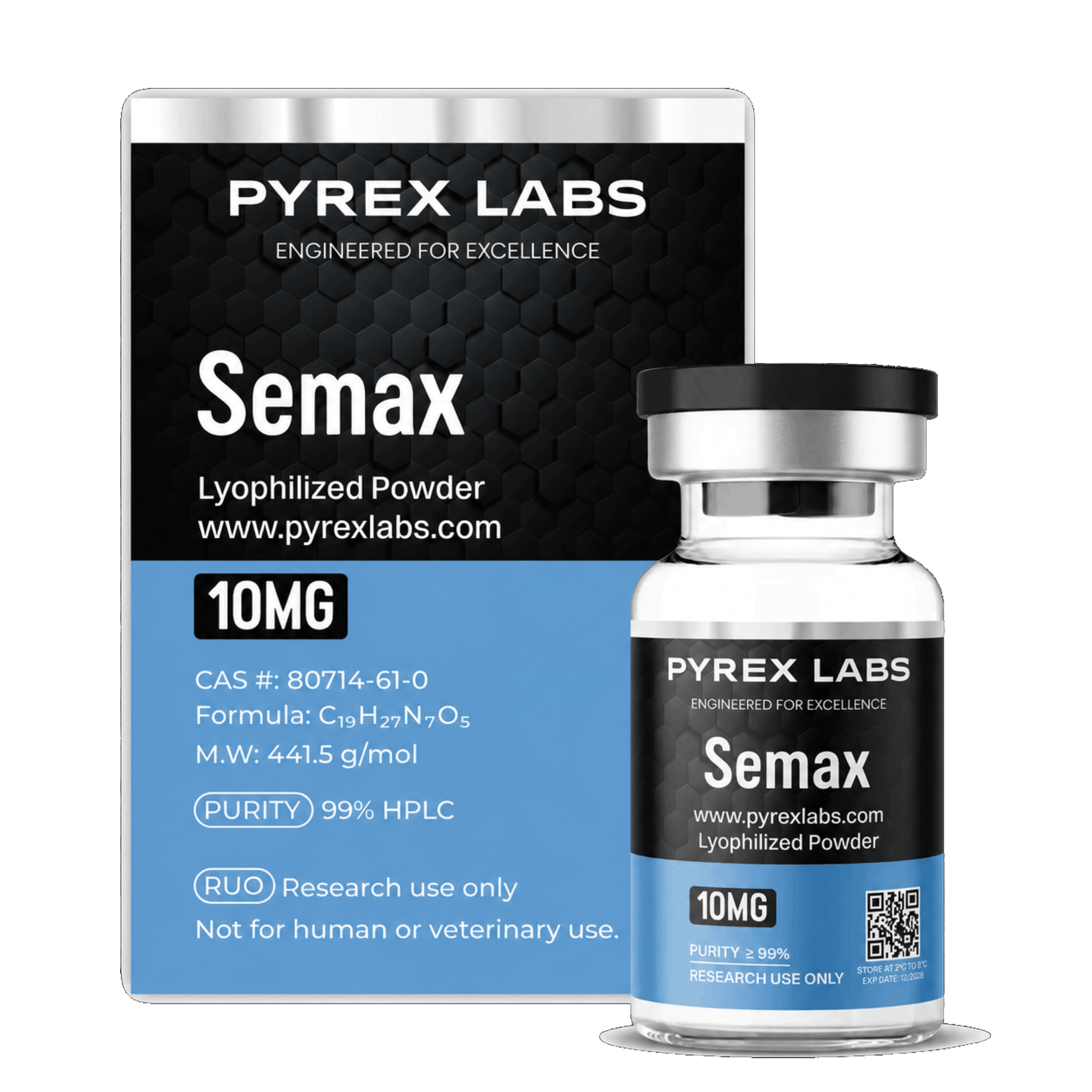
Semax (Met-Glu-His-Phe-Pro-Gly-Pro) is a synthetic heptapeptide analogue of the N-terminal fragment of ACTH from Pyrex Labs. Unlike the parent hormone, Semax lacks hormonal activity (no corticosteroid effects) while retaining potent neurotropic and neuroprotective properties.
The peptide binds specifically to cell membranes in the basal forebrain (KD = 2.4 nM), rapidly increasing BDNF protein levels within 3 hours — a key mediator of synaptic plasticity and cognitive function. Research applications include ischemic stroke models, neuroprotection, cognitive enhancement, BDNF pathway studies, and neuroinflammation research.
Each vial contains lyophilized powder tested to ≥98% purity by HPLC, with sequence confirmed by mass spectrometry.
SHARE:
SHARE:
- Products sold on our website are designed for in vitro testing and lab experimentation exclusively.
- All the products you see on the website are being sold in a lyophilized powder state (freeze-dried), in a sealed sterile vial; and should be reconstituted.
- The product’s label clearly states the amount of product a vial contains; some products are offered in different variations.
- The products we are selling come in a sealed vial but require additional lab equipment for proper testing.
AVAILABILITY:
- Ships today if you order and pay by 12 PM CST
- Some product may take up to 72 hours to ship
- Backordered items will ship in 3-5 days
Semax (Met-Glu-His-Phe-Pro-Gly-Pro) is a synthetic heptapeptide analogue of the N-terminal fragment (4-10) of adrenocorticotropic hormone (ACTH), developed at the Institute of Molecular Genetics, Russian Academy of Sciences . Unlike the parent ACTH hormone, Semax lacks hormonal activity (does not affect corticosteroid production) while retaining potent neurotropic and neuroprotective properties .
The peptide has been successfully used in research models of cerebral ischemia and has demonstrated profound effects on learning, memory formation, and neuronal survival in both rodent and human studies . Its molecular mechanism is associated with increased levels of brain-derived neurotrophic factor (BDNF), a potent modulator of synaptic plasticity and neuronal resilience .
Each vial contains lyophilized powder tested to ≥98% purity by HPLC, with sequence confirmed by mass spectrometry.
Best for: Neuroprotection research, ischemic stroke models, cognitive enhancement studies, BDNF pathway investigations, and neuroinflammatory research.
Key Research Applications
-
Ischemic Stroke & Neuroprotection: Semax has demonstrated neuroprotective properties in cerebral ischemia-reperfusion models, suppressing inflammation-related gene expression and activating neurotransmission-related genes . It has been used successfully in research models of severe impairment of cerebral blood circulation .
-
Cognitive Enhancement (Nootropic): The peptide exerts profound effects on learning and memory formation in rodents and humans, associated with rapid BDNF protein level increases in brain regions critical for cognition .
-
BDNF Pathway Research: Semax applied intranasally (50-250 μg/kg) results in rapid BDNF level increases in the basal forebrain within 3 hours, pointing to specific binding sites in this brain region (KD = 2.4 ± 1.0 nM) .
-
Anxiety & Psychomodulation: Research demonstrates anxiolytic and psychomodulatory effects, correcting behavioral disorders and anxiety-depressive states in laboratory models .
-
Transcriptome Research: RNA-Seq analysis has revealed that Semax suppresses genes related to inflammatory processes and activates genes related to neurotransmission following cerebral ischemia .
Mechanism of Action
Semax exerts its biological effects through several well-characterized pathways:
BDNF Upregulation (Primary Mechanism): Semax binds specifically to cell membranes in the basal forebrain (KD = 2.4 ± 1.0 nM) in a calcium-dependent, reversible manner. Intranasal application leads to rapid BDNF protein level increases in this region, which is associated with the peptide’s cognitive effects .
Neuroinflammation Suppression: Following cerebral ischemia, Semax suppresses the expression of inflammation-related genes and activates neurotransmission-related genes, compensating for mRNA expression patterns disrupted during ischemia-reperfusion .
Synacton Mechanism: Semax functions through a “synacton” — a complex of bioregulators including its metabolic products (HFPGP and PGP) that act in sequence and interaction, extending the regulatory potential of the parent molecule .
Gene Expression Modulation: RNA-Seq studies have identified differentially expressed genes (DEGs) associated with Semax action under cerebral ischemia conditions. Semax significantly reduces expression distortions caused by ischemia for genes associated with immune and neurosignaling pathways .
Route-Dependent Effects: Research in BALB/c mice demonstrates that Semax exhibits route-specific effects — intraperitoneal administration maximizes anxiolytic efficiency, while intranasal administration favors nootropic outcomes .
Semax vs. Selank: Key Differences
While both are synthetic peptides developed by the Russian Academy of Sciences, Semax and Selank have distinct mechanisms and applications:
| Feature | Semax | Selank |
|---|---|---|
| Origin | ACTH (4-10) analogue | Tuftsin analogue |
| Primary Mechanism | BDNF upregulation, ACTH receptor pathways | GABA(A) modulation, enkephalinase inhibition |
| Primary Effect | Nootropic (cognitive enhancement), neuroprotective | Anxiolytic (anxiety reduction) |
| BDNF Effect | Increases BDNF levels | Minimal BDNF effect |
| Receptor Targets | Specific binding sites in basal forebrain | GABA(A) receptors, enkephalinases |
| fMRI Distinction | Distinct connectivity pattern from Selank | Different amygdala-temporal cortex modulation |
| NMDA Glycine Sites | 40% reduction (stronger effect) | 24% reduction (moderate effect) |
Source: Comparative studies demonstrate distinct functional connectivity profiles between Semax and Selank in human fMRI research
Specifications
| Specification | Detail |
|---|---|
| Product | Semax |
| Sequence | Met-Glu-His-Phe-Pro-Gly-Pro |
| Sequence (Short) | MEHFPGP |
| Molecular Formula | C₃₇H₅₁N₉O₁₀S |
| Molecular Weight | 813.93 Da |
| CAS Number | 80714-61-0 |
| Amino Acids | 7 residues (heptapeptide) |
| Form | Lyophilized white powder, sealed glass vial |
| Purity | ≥98% (HPLC) |
| Solubility | Water / Bacteriostatic water / DMSO |
| Storage (lyo) | −20°C, desiccated, protected from light |
| Storage (reconstituted) | 2–8°C short term; aliquot at −20°C for long term |
| Intended use | Laboratory and in-vitro research only |
Key Research Findings
| Research Area | Key Observations |
|---|---|
| BDNF Upregulation | Intranasal Semax (50-250 μg/kg) increases BDNF levels in basal forebrain within 3 hours |
| Specific Binding | KD = 2.4 ± 1.0 nM, BMAX = 33.5 ± 7.9 fmol/mg protein; calcium-dependent, reversible |
| Ischemic Stroke | Suppresses inflammation-related genes; activates neurotransmission-related genes after tMCAO |
| Neuroprotection | Compensates disrupted gene expression profiles; 1539-2066 DEGs identified under Semax action |
| Anxiolytic Effects | Corrects anxiety-depressive states in experimental hyperthyroidism models |
| Route Dependency | Anxiolytic efficiency higher with i.p.; nootropic efficiency higher with i.n. administration |
| NMDA Modulation | 40% reduction in cortical NMDA glycine binding sites (stronger than Selank’s 24%) |
Reconstitution Guidance
Reconstitute Semax with sterile water or bacteriostatic water (0.9% benzyl alcohol) for research use. For intranasal administration studies, sterile water is commonly used. Direct diluent gently down the inner wall of the vial rather than onto the lyophilized cake. Swirl slowly until fully dissolved — do not shake.
Research Dosing (for reference):
-
Rat studies: 50-250 μg/kg (intranasal) for BDNF studies
-
Rat studies: 100 μg/kg (intraperitoneal) for gene expression studies
-
Mouse studies: 0.6 mg/kg/day for behavioral studies
For best results, aliquot the reconstituted solution into single-use tubes immediately to avoid repeated freeze-thaw cycles.
Storage & Stability
Before Reconstitution: Store the unopened, lyophilized vial at −20°C in a desiccated, light-protected environment. Stable under these conditions for up to 3 years .
After Reconstitution: Store working solutions at 2–8°C for short-term use (up to 7-14 days). For long-term storage, prepare single-use aliquots and store at −80°C for up to 1 year . Avoid repeated freeze-thaw cycles.
Quality Assurance
Every lot of Semax undergoes comprehensive release testing against internal specifications, including:
-
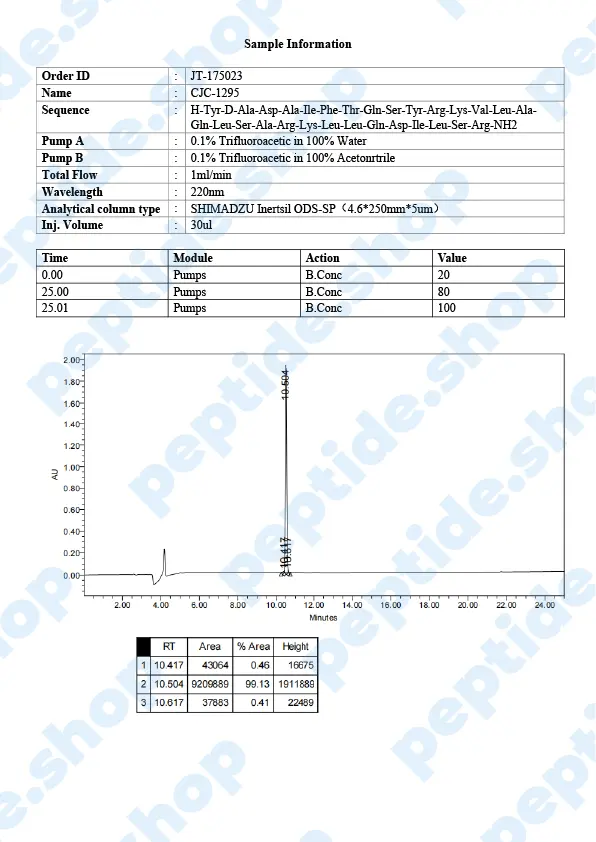
HPLC for purity confirmation (≥98%)
-
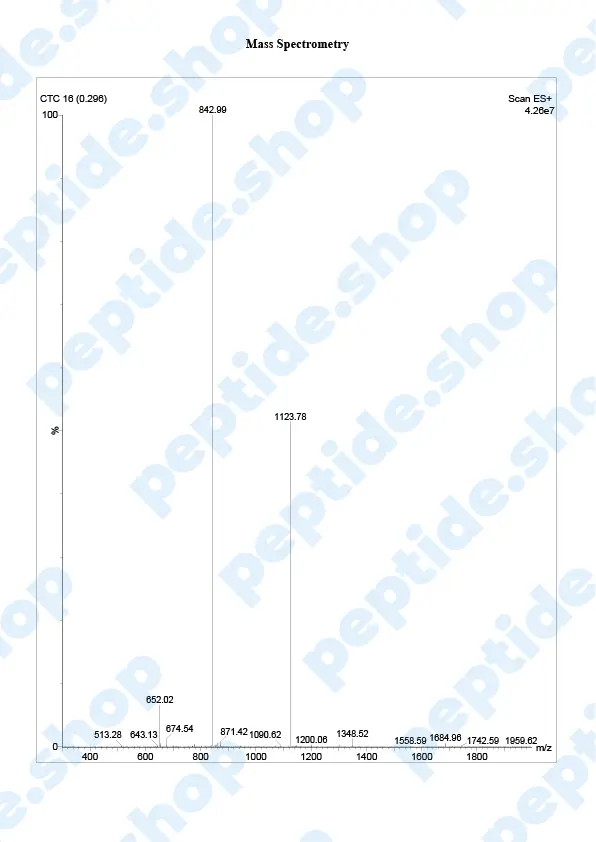
Mass spectrometry for identity verification
-
Visual inspection of vial integrity
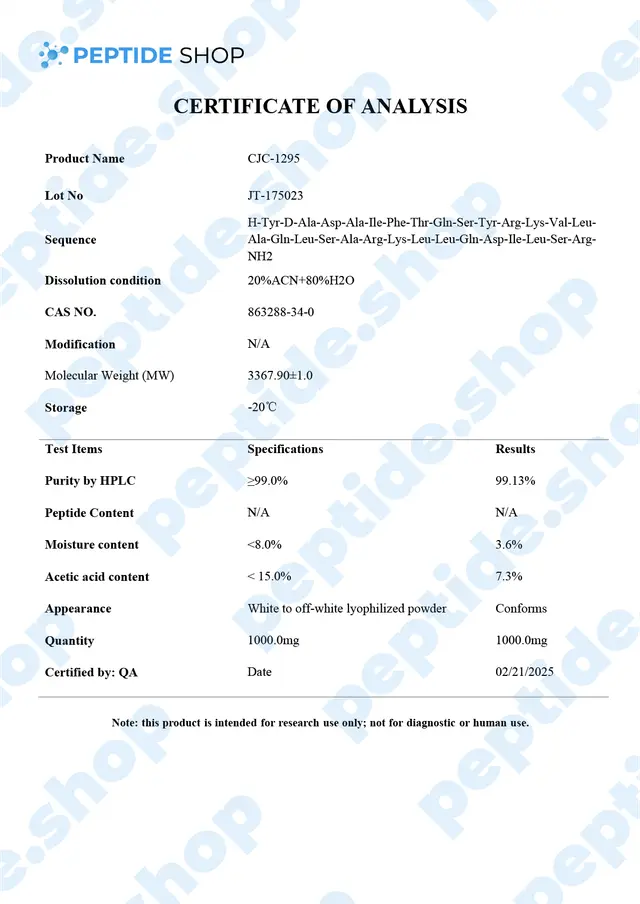
Each vial is coded with a lot number that links directly to release testing documentation. A lot-specific Certificate of Analysis (COA) is available upon request.
Important Research Notes
ACTH Derivative Without Hormonal Activity: Unlike the parent ACTH hormone, Semax is specifically engineered as a non-hormonal analogue. It retains the neurotropic and neuroprotective properties of ACTH fragments while lacking corticosteroid-stimulating activity .
BDNF as a Key Mediator: The cognitive-enhancing effects of Semax are associated with rapid BDNF upregulation in the basal forebrain — a region critical for learning, memory, and attention. This represents a distinct mechanism from traditional nootropics .
Specific Binding Sites Identified: Research has identified specific, saturable, reversible binding sites for Semax in rat basal forebrain cell membranes, with a KD of approximately 2.4 nM, indicating high-affinity interactions with neuronal targets .
Synacton Model: Semax functions through a “synacton” — a complex of bioregulators including its metabolic products (HFPGP and PGP) that act in sequence. This mechanism considerably extends the regulatory potential of the initial molecule .
Transcriptome-Level Protection: RNA-Seq analysis demonstrates that Semax significantly reduces expression distortions caused by ischemia for genes associated with immune and neurosignaling pathways, providing molecular evidence for its neuroprotective effects .
Related Products from Pyrex Labs
Researchers who order Semax frequently also purchase:
-
Selank – Complementary anxiolytic peptide for comparative studies
-
Noopept – Synthetic nootropic for cognitive research
-
NAD+ – For cellular energy and metabolic research
-
MOTS-c – Mitochondrial-derived peptide for metabolic research
-
P21 – CDK5 inhibitor peptide for cognitive research
Frequently Asked Questions
What is Semax? Semax is a synthetic heptapeptide (Met-Glu-His-Phe-Pro-Gly-Pro) analogue of ACTH(4-10). Unlike the parent hormone, it lacks hormonal activity but retains potent neuroprotective and nootropic (cognitive-enhancing) properties .
How does Semax work? Semax binds specifically to sites in the basal forebrain (KD = 2.4 nM), rapidly increasing BDNF protein levels within 3 hours. It also suppresses inflammation-related genes and activates neurotransmission-related genes following cerebral ischemia .
What is the difference between Semax and Selank? Semax is primarily a nootropic (cognitive-enhancing) and neuroprotective agent that works through BDNF upregulation. Selank is primarily an anxiolytic (anxiety-reducing) that works through GABA(A) modulation and enkephalinase inhibition. They have distinct functional connectivity profiles in fMRI studies .
What research has been conducted with Semax? Semax has been studied in models of ischemic stroke, cognitive enhancement, anxiety, and neuroinflammation. RNA-Seq studies have identified Semax-associated genes involved in immune response and neurotransmission pathways .
What is the optimal route of administration in research models? Research demonstrates route-dependent effects: intraperitoneal administration maximizes anxiolytic efficiency, while intranasal administration favors nootropic (cognitive) outcomes. Intranasal administration is also effective for BDNF upregulation .
Is Semax approved for human use? No. This product is for research purposes only and is not FDA-approved for human consumption, medical treatment, or veterinary applications.
Do you provide a Certificate of Analysis? Yes. A lot-specific COA is available upon request for every vial shipped.
Disclaimer
⚠️ FOR RESEARCH PURPOSES ONLY. NOT FOR HUMAN USE.
Not approved by the FDA. Not intended for diagnostic, therapeutic, or medical applications in humans or animals. For in-vitro laboratory research exclusively. Pyrex Labs products are intended solely for scientific investigation and research purposes by qualified professionals.