Tirzepatide
$79.95 – $99.95Price range: $79.95 through $99.95
- Buy 5+ of each and save 5%
- Buy 10+ of each and save 8%
- Product is sold in powder form, needs reconstitution before use. Please read more on our FAQ page.
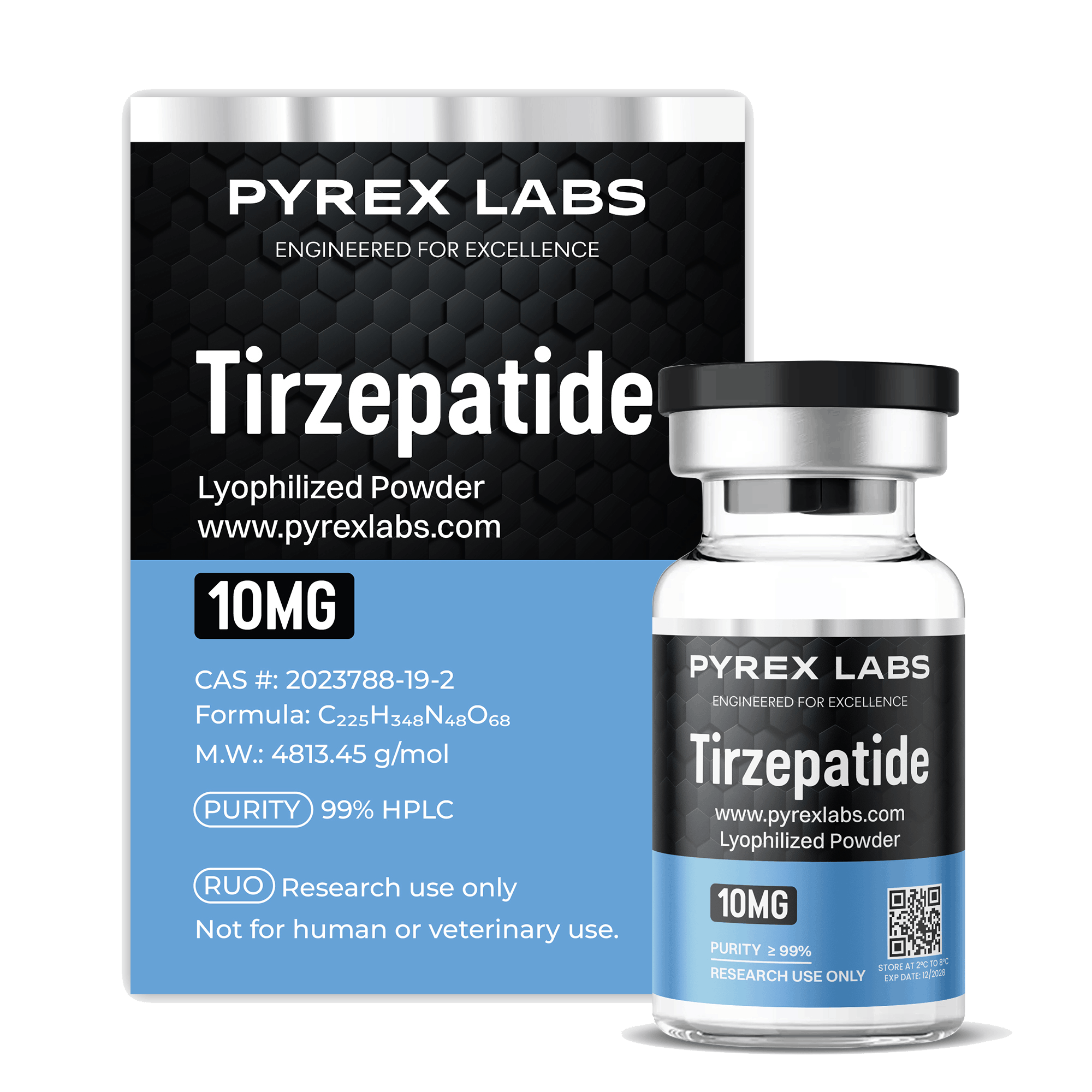
Tirzepatide is a synthetic 39-amino acid peptide and the first-in-class dual agonist of the GIP and GLP-1 receptors from Pyrex Labs. Unlike selective GLP-1 receptor agonists (semaglutide, liraglutide), tirzepatide simultaneously activates both major incretin hormone receptors, producing synergistic metabolic effects that surpass single-receptor targeting.
The peptide stimulates glucose-dependent insulin secretion, suppresses glucagon, slows gastric emptying, and reduces appetite via central receptor activation in the hypothalamus. A C20 fatty diacid moiety enables albumin binding, extending the half-life to approximately 5 days for once-weekly dosing. Research applications include type 2 diabetes, obesity, MASLD/MASH, obstructive sleep apnea, and cardiometabolic studies.
Each vial contains lyophilized powder tested to ≥98% purity by HPLC, with sequence confirmed by mass spectrometry.
SHARE:
SHARE:
- Products sold on our website are designed for in vitro testing and lab experimentation exclusively.
- All the products you see on the website are being sold in a lyophilized powder state (freeze-dried), in a sealed sterile vial; and should be reconstituted.
- The product’s label clearly states the amount of product a vial contains; some products are offered in different variations.
- The products we are selling come in a sealed vial but require additional lab equipment for proper testing.
AVAILABILITY:
- Ships today if you order and pay by 12 PM CST
- Some product may take up to 72 hours to ship
- Backordered items will ship in 3-5 days
Tirzepatide is a synthetic 39-amino acid peptide and the first-in-class dual agonist of the glucose-dependent insulinotropic polypeptide (GIP) and glucagon-like peptide-1 (GLP-1) receptors from Pyrex Labs . Unlike selective GLP-1 receptor agonists (such as semaglutide or liraglutide), tirzepatide simultaneously activates both major incretin hormone receptors, producing synergistic metabolic effects that surpass single-receptor targeting .
The peptide is structurally based on the native GIP sequence with modifications that confer high-affinity binding to both the GIP receptor (Ki = 0.135 nM) and the GLP-1 receptor (Ki = 4.23 nM) in human cell lines . A C20 fatty diacid moiety enables albumin binding, extending the half-life to approximately 5 days and supporting once-weekly dosing in research models .
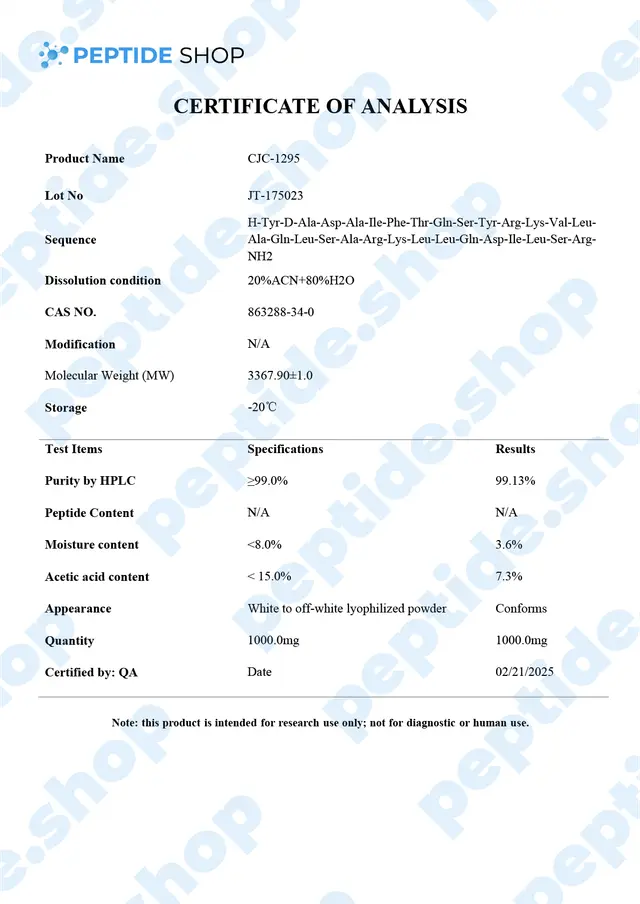
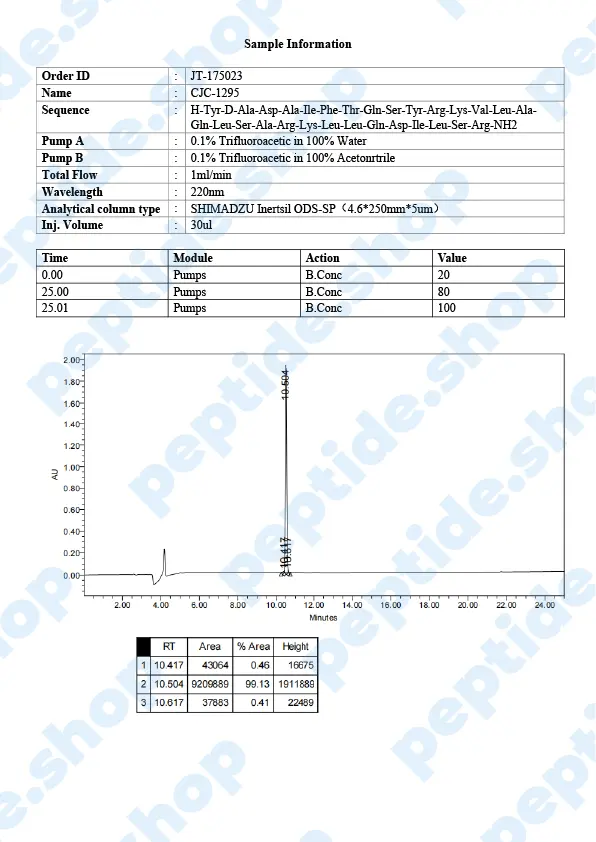
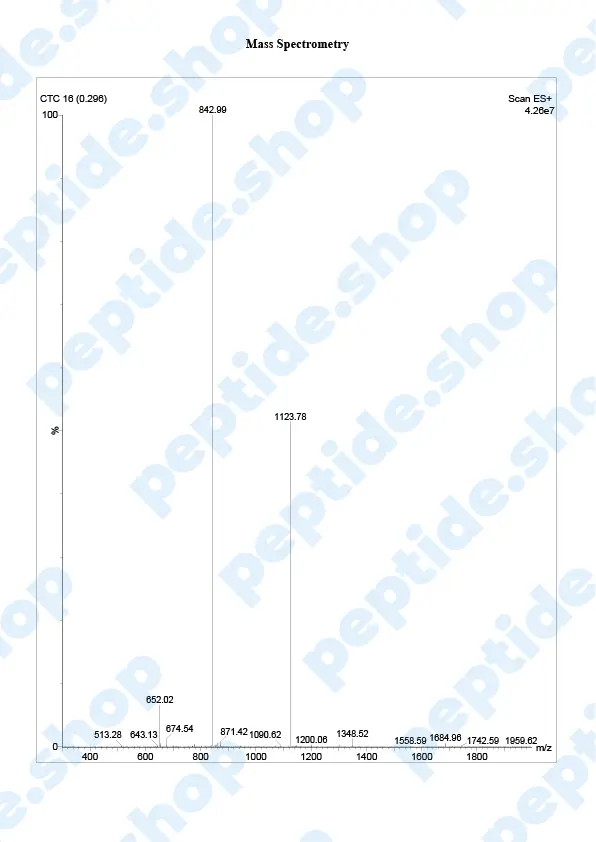
Each vial contains lyophilized powder tested to ≥98% purity by HPLC, with sequence confirmed by mass spectrometry.
Best for: Metabolic research, incretin receptor pharmacology, obesity and diabetes studies, MASLD/MASH investigations, and appetite regulation research.
Key Research Applications
-
Type 2 Diabetes Research: Investigated for glucose-dependent insulin secretion, glucagon suppression, and glycemic control in preclinical models
-
Obesity & Weight Regulation: Studied for appetite suppression via central GLP-1/GIP receptor activation in the hypothalamus, reduction of “food noise,” and enhanced satiety signaling
-
MASLD/MASH Research: Demonstrated reduction in hepatic lipid accumulation, triglyceride content, and cholesterol levels in diet-induced mouse models
-
Obstructive Sleep Apnea (OSA): Investigated for weight-dependent improvements in apnea-hypopnea index
-
Cardiometabolic Research: Explored for effects on blood pressure, lipid profiles, and inflammatory markers
-
Neuroprotective Studies: GLP-1 receptor activation studied in cognitive decline and neurodegenerative disease models
Mechanism of Action
Tirzepatide exerts its biological effects through dual activation of the GIP and GLP-1 receptors, which are G protein-coupled receptors expressed in the pancreas, central nervous system, adipose tissue, and gastrointestinal tract .
GLP-1 Receptor Activation:
-
Stimulates glucose-dependent insulin secretion from pancreatic beta cells
-
Suppresses glucagon release from alpha cells
-
Slows gastric emptying, prolonging post-meal satiety
-
Acts on hypothalamic and brainstem receptors to reduce appetite and food intake
-
May offer neuroprotective effects
GIP Receptor Activation:
-
Enhances glucose-dependent insulin secretion
-
Modulates alpha-cell function (glucagon secretion in hypoglycemic conditions)
-
When co-activated with GLP-1, shifts adipose tissue from fat storage to fat mobilization
-
Reduces beta-cell apoptosis and enhances beta-cell mass in animal models
Synergistic Effects: The simultaneous activation of both receptors produces effects substantially greater than the sum of each in isolation, including stronger appetite suppression, enhanced fat mobilization, and superior glycemic control compared to selective GLP-1 receptor agonists .
Specifications
| Specification | Detail |
|---|---|
| Product | Tirzepatide |
| Synonyms | LY3298176, GIP/GLP-1 RA |
| Molecular Formula | C₂₂₅H₃₄₈N₄₈O₆₈ |
| Molecular Weight | ~4813.5 Da |
| Amino Acids | 39 residues |
| Half-Life | ~5 days |
| CAS Number | 2023788-19-2 |
| Form | Lyophilized white powder, sealed glass vial |
| Purity | ≥98% (HPLC) |
| Solubility | Water / Bacteriostatic water |
| Origin | Synthesized in the USA |
| Storage (lyo) | −20°C, desiccated, protected from light |
| Storage (reconstituted) | 2–8°C short term; aliquot at −20°C for long term |
| Intended use | Laboratory and in-vitro research only |
Key Research Findings
Clinical Trial Data Summary:
| Trial Program | Population | Key Findings |
|---|---|---|
| SURPASS | Type 2 Diabetes | HbA1c reduction up to 2.5%; weight loss up to 12.4 kg |
| SURMOUNT | Obesity (non-diabetic) | Weight reduction up to 20.9% at 72 weeks |
| SURMOUNT-OSA | Obesity with OSA | Reduced apnea-hypopnea index and improved sleep outcomes |
Comparative Efficacy (vs. Selective GLP-1 Agonists):
-
Greater HbA1c reduction (2.46% vs. 1.1-1.9% for dulaglutide/semaglutide)
-
Superior weight loss (11.3-12.4 kg vs. 4.8 kg for dulaglutide)
-
Approximately 20.9% average weight loss at 15 mg vs. ~15% for semaglutide 2.4 mg
Preclinical MASLD Findings (Mouse Models):
-
Reduced body weight gain and liver weight
-
Decreased hepatic vacuolation and lipid deposition
-
Lowered liver triglyceride and cholesterol content
-
Downregulated CD36 and OBP2A expression (lipid uptake proteins)
-
No evidence of drug-induced liver injury (no ALT/AST elevation)
Receptor Binding Profile
| Receptor | Binding Affinity (Ki) | Species |
|---|---|---|
| GIPR (human) | 0.135 nM | Human |
| GLP-1R (human) | 4.23 nM | Human |
| GIPR (mouse) | 30-100 fold reduced | Mouse |
Note: Due to significantly lower affinity at the mouse GIPR, researchers using murine models should account for species differences in receptor pharmacology and consider appropriate dose adjustments .
Reconstitution Guidance
Reconstitute Tirzepatide with sterile water or bacteriostatic water (0.9% benzyl alcohol) for research use. Direct diluent gently down the inner wall of the vial rather than onto the lyophilized cake. Swirl slowly until fully dissolved — do not shake.
Many investigators use 0.5-2 mL per vial to achieve working concentrations. Due to its long half-life and albumin-binding properties, researchers should consider peptide adsorption to plastic surfaces and use low-binding tubes where appropriate. For best results, aliquot the reconstituted solution into single-use tubes immediately to avoid repeated freeze-thaw cycles.
Storage & Stability
Before Reconstitution: Store the unopened, lyophilized vial at −20°C in a desiccated, light-protected environment. Stable under these conditions for the shelf-life indicated on the certificate of analysis.
After Reconstitution: Store working solutions at 2–8°C for short-term use (up to 7-14 days). For long-term storage, prepare single-use aliquots and freeze at −20°C. Avoid repeated freeze-thaw cycles.
Quality Assurance
Every lot of Tirzepatide undergoes comprehensive release testing against internal specifications, including:
-
HPLC for purity confirmation (≥98%)
-
Mass spectrometry for identity verification
-
Visual inspection of vial integrity
Each vial is coded with a lot number that links directly to release testing documentation. A lot-specific Certificate of Analysis (COA) is available upon request.
Important Research Notes
Drug Class & Regulatory Status: Tirzepatide is the first and only approved dual GIP/GLP-1 receptor agonist, receiving FDA approval for type 2 diabetes in May 2022 and for obesity/weight management in 2024 . It is marketed as Mounjaro® for diabetes and Zepbound® for obesity/OSA .
Species Differences: Researchers should note that tirzepatide has significantly lower potency at the mouse GIP receptor (30-100 fold reduced) compared to the human receptor, as it is derived from the human GIP sequence . High doses still produce activity at both receptors in mouse models, but dose extrapolation requires careful consideration.
Biased Signaling: Tirzepatide displays biased signaling at the GLP-1 receptor, favoring cAMP generation over beta-arrestin recruitment, which may reduce receptor internalization and contribute to its enhanced efficacy .
Observed Adverse Events in Clinical Context (For Reference):
-
Most common: gastrointestinal effects (nausea, diarrhea, vomiting, constipation) during dose escalation
-
Boxed warning for risk of thyroid C-cell tumors (based on rodent studies)
-
Contraindicated in patients with MEN2 or family history of medullary thyroid carcinoma
-
Rare instances of acute gallbladder disease (0.6% incidence)
-
Isolated case reports of acute liver injury (rare, self-limited)
Related Products from Pyrex Labs
Researchers who order Tirzepatide frequently also purchase:
-
Semaglutide – Selective GLP-1 receptor agonist for comparative studies
-
Liraglutide – Shorter-acting GLP-1 receptor agonist
-
Retatrutide – Triple agonist (GLP-1/GIP/glucagon) for next-generation research
-
MOTS-c – Mitochondrial-derived peptide for metabolic research
Frequently Asked Questions
What is Tirzepatide? Tirzepatide is a 39-amino acid synthetic peptide that acts as a dual agonist at both the GIP and GLP-1 receptors — the first compound in this new drug class .
How is Tirzepatide different from Semaglutide (Wegovy/Ozempic)? Semaglutide selectively targets only the GLP-1 receptor. Tirzepatide targets both GIP and GLP-1 receptors, producing synergistic effects that result in greater weight loss (20.9% vs. ~15% in clinical trials) and superior glycemic control .
What is the mechanism for weight loss? Tirzepatide reduces appetite through multiple mechanisms: direct action on GLP-1 and GIP receptors in the hypothalamus and brainstem, slowing of gastric emptying, and shifting adipose tissue from fat storage to fat mobilization when both receptors are activated simultaneously .
What research has been conducted with Tirzepatide? Tirzepatide has been studied extensively in the SURPASS (type 2 diabetes), SURMOUNT (obesity), SURMOUNT-OSA (sleep apnea), and SYNERGY-NASH (MASH) clinical trial programs, as well as numerous preclinical studies on metabolic dysfunction .
Is Tirzepatide approved for human use? No. This product is for research purposes only and is not for human consumption, medical treatment, or veterinary applications. While tirzepatide is FDA-approved as a prescription medication (Mounjaro®/Zepbound®), Pyrex Labs sells this product strictly for laboratory and in-vitro research use.
Do you provide a Certificate of Analysis? Yes. A lot-specific COA is available upon request for every vial shipped.