KPV
$49.95
- Buy 5+ of each and save 5%
- Buy 10+ of each and save 8%
- Product is sold in powder form, needs reconstitution before use. Please read more on our FAQ page.
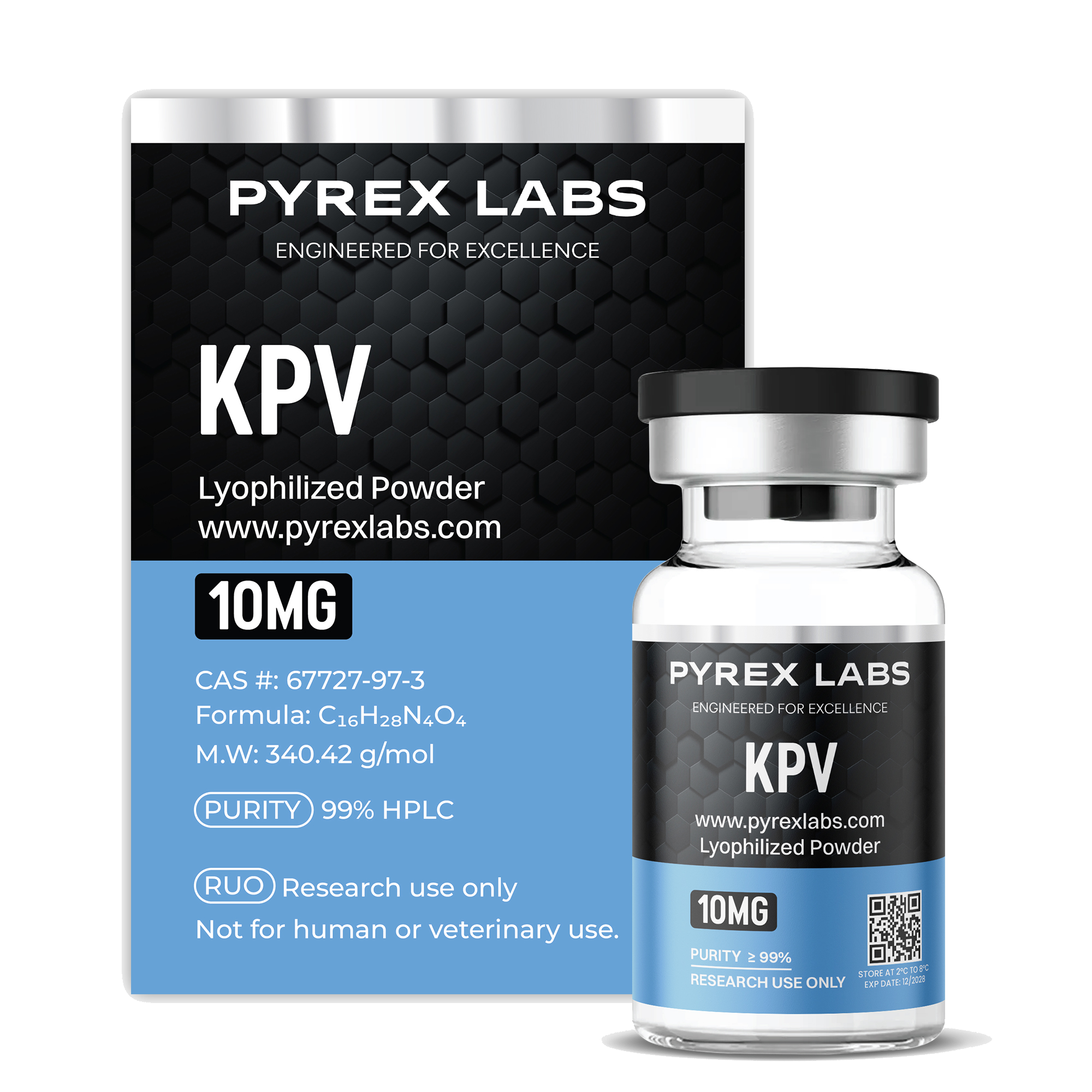
KPV (Lysine-Proline-Valine) is a synthetic tripeptide corresponding to the C-terminal fragment of alpha-melanocyte-stimulating hormone (α-MSH) from Pyrex Labs. Despite being only a small portion of the parent hormone, KPV retains the full anti-inflammatory activity of α-MSH while lacking its melanotropic effects — meaning no pigmentation.
The peptide is transported into cells via the PepT1 transporter, where it inhibits NF-κB activation, reduces MAP kinase phosphorylation (ERK, JNK, p38), and decreases secretion of pro-inflammatory cytokines such as IL-8. Research applications include inflammatory bowel disease (IBD), dermatological inflammation, peritonitis models, and general inflammation pathway studies.
Each 5mg vial contains lyophilized powder tested to ≥98% purity by HPLC, with sequence confirmed by mass spectrometry.
SHARE:
SHARE:
- Products sold on our website are designed for in vitro testing and lab experimentation exclusively.
- All the products you see on the website are being sold in a lyophilized powder state (freeze-dried), in a sealed sterile vial; and should be reconstituted.
- The product’s label clearly states the amount of product a vial contains; some products are offered in different variations.
- The products we are selling come in a sealed vial but require additional lab equipment for proper testing.
AVAILABILITY:
- Ships today if you order and pay by 12 PM CST
- Some product may take up to 72 hours to ship
- Backordered items will ship in 3-5 days
KPV (Lysine-Proline-Valine) is a synthetic tripeptide corresponding to the C-terminal fragment of alpha-melanocyte-stimulating hormone (α-MSH) . Despite being only a small portion of the parent hormone, KPV retains the full anti-inflammatory activity of α-MSH while lacking its melanotropic effects — meaning it does not cause pigmentation . This makes KPV a cleaner research tool for studying inflammation independent of melanocortin receptor activation.
Unlike α-MSH, KPV is smaller in size, more chemically stable, and does not bind significantly to melanocortin receptors (MC-Rs) . Research indicates its anti-inflammatory effects are mediated through alternative mechanisms, primarily through inhibition of NF-κB activation and reduction of pro-inflammatory cytokine secretion .
Each 5mg vial contains lyophilized powder tested to ≥98% purity by HPLC, with sequence confirmed by mass spectrometry.
Best for: Inflammation pathway research, NF-κB signaling studies, gastrointestinal inflammation models, dermatological research, and cytokine regulation investigations.
Key Research Applications
-
Inflammatory Bowel Disease (IBD) Research: KPV has been shown to reduce the incidence of DSS- and TNBS-induced colitis in mouse models when administered orally . It is transported into intestinal epithelial and immune cells via the PepT1 transporter, which is upregulated in inflamed colon tissue .
-
Dermatological Research: KPV protects human keratinocytes from fine dust (PM10)-induced damage by reducing reactive oxygen species (ROS), inhibiting apoptosis, and blocking inflammatory signaling through the ERK/p38 MAPK/NF-κB axis .
-
NF-κB Pathway Studies: Nanomolar concentrations of KPV inhibit NF-κB activation and MAP kinase phosphorylation (ERK1/2, JNK, p38), leading to reduced secretion of pro-inflammatory cytokines such as IL-8 .
-
Immune Modulation Research: KPV has been investigated for its effects on macrophage activation, T cell responses, and systemic inflammation in models of peritonitis and crystal-induced inflammation .
Mechanism of Action
KPV exerts its biological effects through several well-characterized pathways:
PepT1-Mediated Transport: KPV is transported into cells via the H+-coupled oligopeptide transporter PepT1, which is expressed in small intestinal epithelial cells and induced in the colon during inflammation . This transport mechanism is essential for KPV’s anti-inflammatory activity in the gut.
NF-κB Inhibition: KPV delays NF-κB activation and accelerates IκB-α recovery, reducing the duration of inflammatory signaling. It also decreases IκB-α phosphorylation and degradation in response to pro-inflammatory stimuli .
MAPK Pathway Modulation: KPV strongly decreases IL-1β-induced phosphorylation of ERK1/2, JNK, and p38 MAP kinases, which are critical mediators of inflammatory responses .
ROS Reduction: In keratinocyte models, KPV inhibits reactive oxygen species (ROS) production, reducing oxidative stress and preventing apoptosis through regulation of Bax, Bcl-2, and cleaved caspase-3 expression .
Specifications
| Specification | Detail |
|---|---|
| Product | KPV (Lysine-Proline-Valine) |
| Sequence | H-Lys-Pro-Val-OH |
| Molecular Formula | C₁₆H₃₀N₄O₄ |
| Molecular Weight | 342.43 Da |
| Amino Acids | 3 residues |
| Form | Lyophilized white powder, sealed glass vial |
| Purity | ≥98% (HPLC) |
| Solubility | Water / Bacteriostatic water |
| Origin | Synthesized in the USA |
| Storage (lyo) | −20°C, desiccated, protected from light |
| Storage (reconstituted) | 2–8°C short term; aliquot at −20°C for long term |
| Intended use | Laboratory and in-vitro research only |
Reconstitution Guidance
Reconstitute KPV with sterile water or bacteriostatic water (0.9% benzyl alcohol) for research use. Direct diluent gently down the inner wall of the vial rather than onto the lyophilized cake. Swirl slowly until fully dissolved — do not shake.
Choose a reconstitution volume that matches your experimental protocol. Many investigators use 0.5-2 mL per vial to achieve working concentrations. Research has demonstrated biological activity at nanomolar concentrations .
For best results, aliquot the reconstituted solution into single-use tubes immediately to avoid repeated freeze-thaw cycles.
Storage & Stability
Before Reconstitution: Store the unopened, lyophilized vial at −20°C in a desiccated, light-protected environment. Stable under these conditions for the shelf-life indicated on the certificate of analysis.
After Reconstitution: Store working solutions at 2–8°C for short-term use (up to 7-14 days). For long-term storage, prepare single-use aliquots and freeze at −20°C. Avoid repeated freeze-thaw cycles, which significantly degrade peptide activity.
Quality Assurance
Every lot of KPV undergoes comprehensive release testing against internal specifications, including:
-
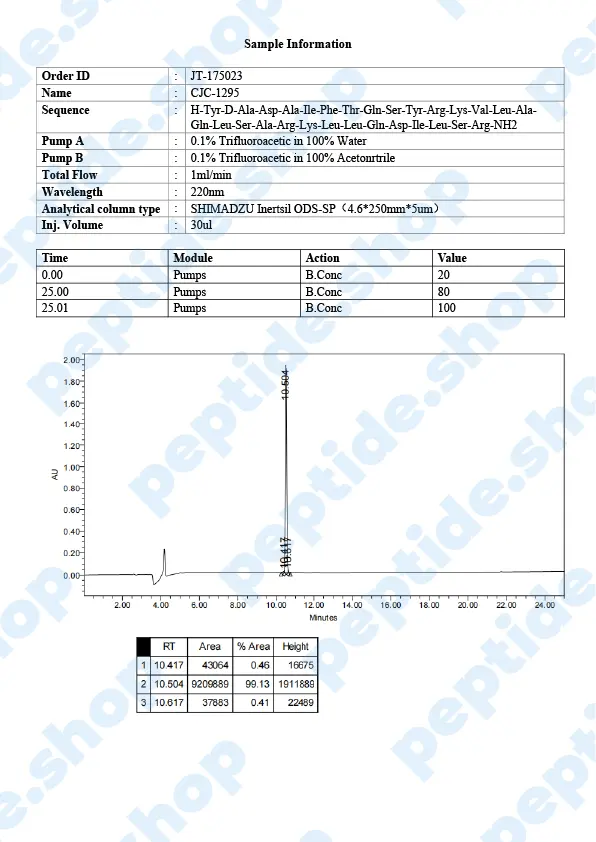
HPLC for purity confirmation (≥98%)
-
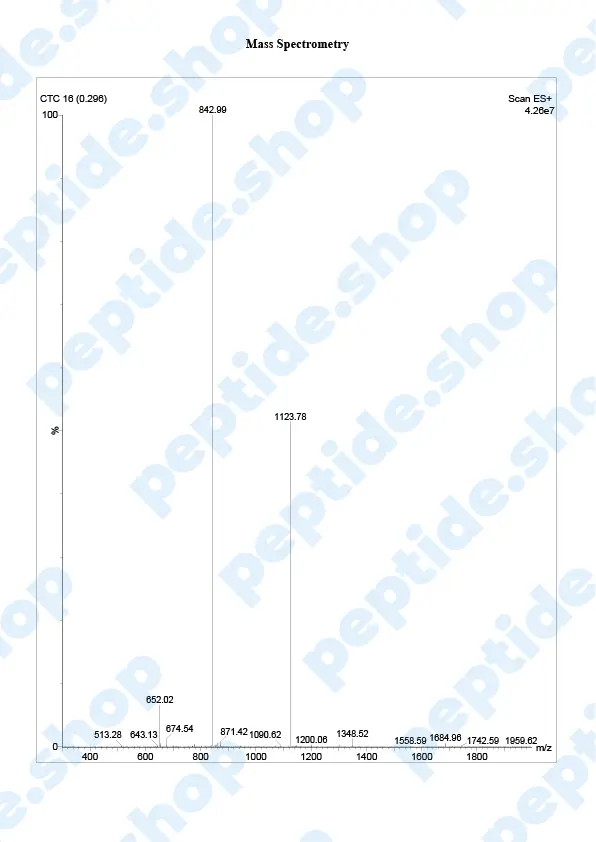
Mass spectrometry for identity verification
-
Visual inspection of vial integrity
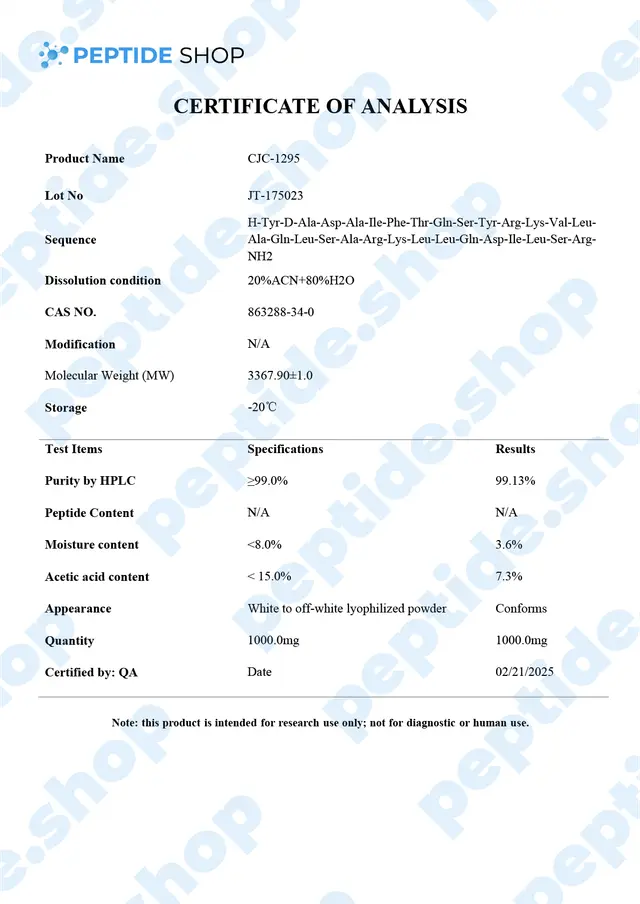
Each vial is coded with a lot number that links directly to release testing documentation. A lot-specific Certificate of Analysis (COA) is available upon request.
Important Research Notes
Discovery Context: KPV is the C-terminal tripeptide (amino acids 11-13) of α-melanocyte-stimulating hormone (α-MSH). Early research established that the anti-inflammatory activity of α-MSH resides in this small fragment, leading to extensive investigation of KPV as a more stable and selective research tool .
Key Advantage Over α-MSH: Unlike the parent hormone, KPV does not bind significantly to melanocortin receptors and therefore does not cause pigmentation . This allows researchers to study the anti-inflammatory properties of the α-MSH pathway without the confounding effects of melanogenesis.
PepT1 Dependence: KPV’s anti-inflammatory effects in intestinal models depend on transport via PepT1. Cells that do not express PepT1 (such as HT29-Cl.19A) do not respond to KPV treatment, confirming the necessity of this transporter for KPV activity .
Published Research Observations:
-
Oral administration of KPV in drinking water reduced colitis in mouse models
-
KPV (50 μg/mL) protected human keratinocytes from fine dust-induced damage
-
Systemic KPV treatment (3-88 nmol) reduced neutrophil migration in peritonitis models
Related Products from Pyrex Labs
Researchers who order KPV frequently also purchase:
-
BPC-157 – For tissue repair and gut health research
-
α-MSH (full sequence) – For comparative melanocortin studies
-
KPV & BPC Combo – For combined inflammation and repair research
-
MOTS-c – For mitochondrial and metabolic research
-
LL-37 – For antimicrobial peptide research
Frequently Asked Questions
What does KPV stand for? KPV is the one-letter amino acid code for Lysine-Proline-Valine, the three amino acids that comprise this tripeptide.
How is KPV different from α-MSH? KPV is the C-terminal fragment (amino acids 11-13) of α-MSH. It retains the full anti-inflammatory activity of the parent hormone but lacks melanotropic effects (does not cause pigmentation) and is smaller and more chemically stable .
Does KPV work through melanocortin receptors? Research suggests KPV’s anti-inflammatory effects are not mediated through melanocortin receptors, as it does not increase cAMP levels. Instead, its activity depends on transport via PepT1 and inhibition of NF-κB and MAPK pathways .
What research areas use KPV? KPV is studied in inflammatory bowel disease (IBD), dermatology (skin inflammation, pollution-induced damage), peritonitis models, and general inflammation pathway research .
Is KPV approved for human use? No. This product is for research purposes only and is not FDA-approved for human consumption, medical treatment, or veterinary applications.
Do you provide a Certificate of Analysis? Yes. A lot-specific COA is available upon request for every vial shipped.