ASC36: A NEXT-GENERATION LONG-ACTING AMYLIN AGONIST FOR OBESITY RESEARCH
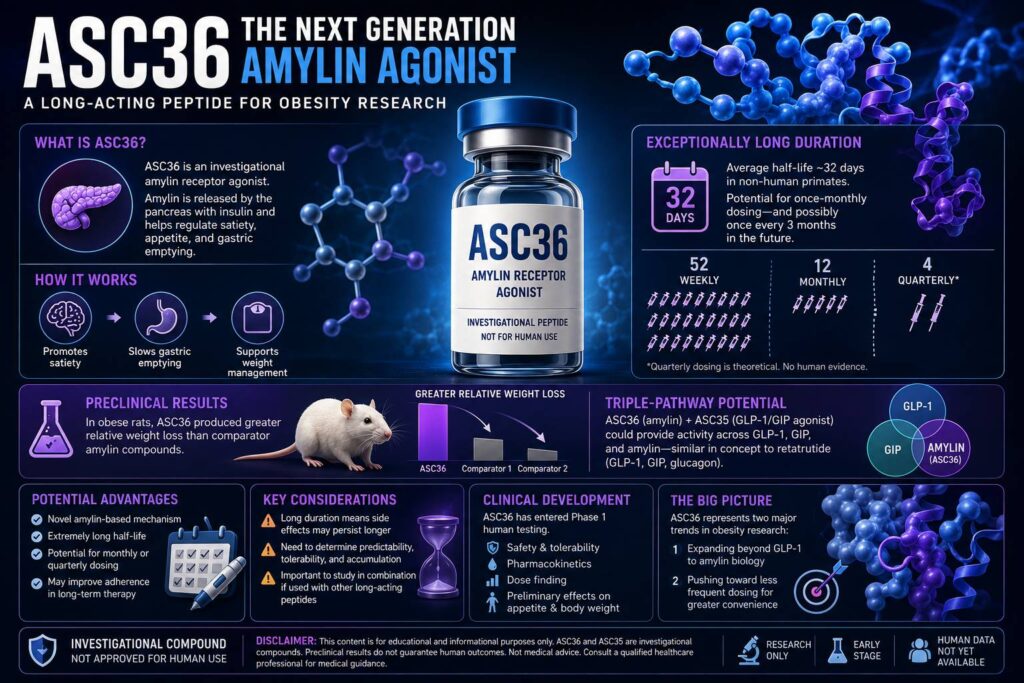
ASC36 is an investigational obesity peptide being developed as an amylin receptor agonist. Amylin is a naturally occurring hormone released by pancreatic beta cells alongside insulin and plays an important role in satiety, appetite regulation, and gastric emptying.
This mechanism distinguishes ASC36 from many of today’s leading obesity therapies, which primarily focus on GLP-1, GIP, and glucagon signaling. Instead of simply adding another incretin-based approach, ASC36 explores amylin as a complementary pathway for regulating appetite and body weight.
What Makes ASC36 Different?
One of the most notable characteristics reported for ASC36 is its exceptionally long duration of action.
In non-human primate studies, ASC36 reportedly demonstrated an average half-life of approximately 32 days. If a similarly prolonged pharmacokinetic profile is eventually demonstrated in humans, it could potentially support once-monthly administration rather than the once-weekly schedules common among current injectable obesity therapies.
The developer has also discussed the longer-term possibility of dosing as infrequently as once every three months. However, quarterly dosing remains speculative, and there is currently no human evidence demonstrating that such an interval would be effective or appropriate.
Could Monthly Dosing Change Obesity Treatment?
Reducing injection frequency could become an important competitive advantage.
A once-weekly injectable treatment involves approximately 52 scheduled injections per year. A monthly therapy would reduce that to about 12, while a hypothetical quarterly regimen would require only four.
For a chronic condition requiring long-term treatment, fewer injections could potentially improve convenience and adherence. If several future obesity therapies ultimately produce comparable efficacy and tolerability, dosing frequency may become an important factor in treatment selection.
Whether ASC36 can actually deliver that advantage will depend on its human pharmacokinetic and clinical trial results.
What Does the Preclinical Research Show?
ASC36 has also attracted attention because of its preclinical weight-management results.
In obese rat models, the compound reportedly produced greater relative weight reduction than experimental amylin compounds used as comparators.
These findings are encouraging, but the distinction between animal research and human clinical evidence is essential.
Animal studies can help researchers identify promising compounds and determine whether further development is justified. They cannot establish how much weight humans will lose or prove that ASC36 will outperform existing or experimental obesity medications.
At this stage, human weight-loss efficacy has not yet been established.
ASC35 + ASC36: A Triple-Pathway Strategy
The developer is also investigating ASC35, another peptide designed to target the GLP-1 and GIP receptors.
Combining ASC35 with ASC36 could theoretically create activity across three pathways:
GLP-1 + GIP + Amylin
This creates an interesting comparison with retatrutide, which targets:
GLP-1 + GIP + Glucagon
Both approaches reflect a broader trend in obesity-drug development: rather than relying on a single biological pathway, researchers are investigating multi-pathway therapies that may influence appetite, metabolism, energy balance, and body weight through complementary mechanisms.
The proposed ASC35/ASC36 combination is also being developed with long-interval dosing in mind.
Whether replacing glucagon activity with amylin activity offers meaningful advantages cannot be determined until comparative human evidence becomes available.
The Potential Challenge of an Ultra-Long Half-Life
An extremely long duration could be both an advantage and a challenge.
If a short-acting medication produces significant adverse effects, exposure generally declines relatively quickly after treatment is discontinued. An ultra-long-acting compound is different: once administered, meaningful drug concentrations could potentially remain in the body for an extended period.
Researchers will therefore need to understand:
How predictable ASC36 exposure is in humans
How well different doses are tolerated
Whether adverse effects persist because of its long half-life
How repeated doses accumulate
Whether monthly doses significantly overlap
Whether combination therapy changes its pharmacokinetics or tolerability
These questions become particularly important if multiple long-acting peptides are administered together.
Human Testing Is the Critical Next Step
ASC36 has moved into early human clinical development, but it remains an investigational compound.
Early-phase testing will be important for establishing fundamental questions surrounding:
Safety: What adverse effects occur and how severe are they?
Tolerability: Can participants comfortably remain on treatment?
Pharmacokinetics: Does the unusually long half-life observed preclinically translate to humans?
Dose response: What level of exposure produces measurable biological effects?
Pharmacodynamics: Does ASC36 meaningfully influence appetite, satiety, food intake, or body weight?
Until these questions are answered, the reported 32-day preclinical half-life and animal weight-loss findings should be viewed as promising research signals rather than established human outcomes.
Why ASC36 Is Worth Watching
The most interesting aspect of ASC36 is not that it has already proven superior to existing obesity medications—it hasn’t.
Instead, ASC36 represents two potentially important directions in next-generation obesity research.
First is the increasing interest in amylin biology as researchers expand beyond therapies centered primarily on GLP-1.
Second is the push toward longer-acting obesity medications that could potentially reduce treatment frequency from weekly injections to monthly administration or perhaps even longer intervals.
If ASC36 can eventually combine meaningful weight reduction with acceptable tolerability and substantially less frequent dosing, it could represent an important evolution in obesity pharmacotherapy.
For now, however, ASC36 remains an early-stage investigational peptide, and human clinical trials will determine whether its impressive preclinical pharmacokinetics and metabolic findings translate into meaningful benefits for patients.
⚠️ Disclaimer: This article is provided for educational and informational purposes only. ASC36 and ASC35 are investigational compounds and are not established treatments based on the information discussed here. Preclinical findings do not establish safety or effectiveness in humans. This content is not medical advice, diagnosis, or a treatment recommendation.
CHAPTER 1: OVERVIEW 📋 I. History of VIP 🏛️ Vasoactive Intestinal Peptide (VIP) is a naturally occurring 28-amino-acid neuropeptide first isolated in 1970 by Sami
The modern anti-obesity landscape has been revolutionized by incretin mimetics like semaglutide and tirzepatide. While these therapies routinely produce weight reductions of 20 to 40
As the race for next-generation obesity and metabolic treatments intensifies, Eli Lilly’s triple agonist retatrutide (targeting GLP-1, GIP, and glucagon receptors) has dominated headlines. However,
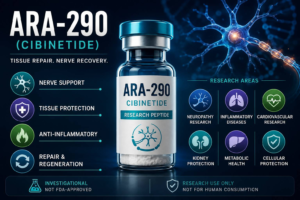
CHAPTER 1: OVERVIEW I. History of ARA-290 (Cibinetide) ARA-290, also known as cibinetide, is an 11-amino-acid peptide derived from a tissue-protective region of erythropoietin (EPO).
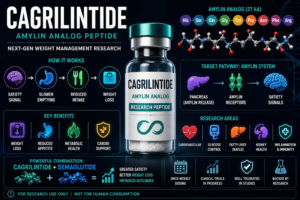
CHAPTER 1: OVERVIEW 📋 I. History of Cagrilintide 🏛️ Cagrilintide is an investigational, long-acting analog of amylin, a hormone naturally released by pancreatic beta cells
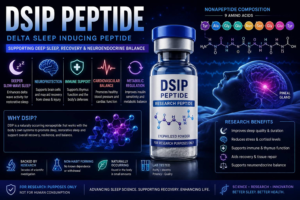
CHAPTER 1: OVERVIEW 📋 I. History of Delta Sleep-Inducing Peptide (DSIP) 🏛️ Delta Sleep-Inducing Peptide (DSIP) is a naturally occurring nonapeptide composed of nine amino