CHAPTER 1: OVERVIEW 📋
I. Background
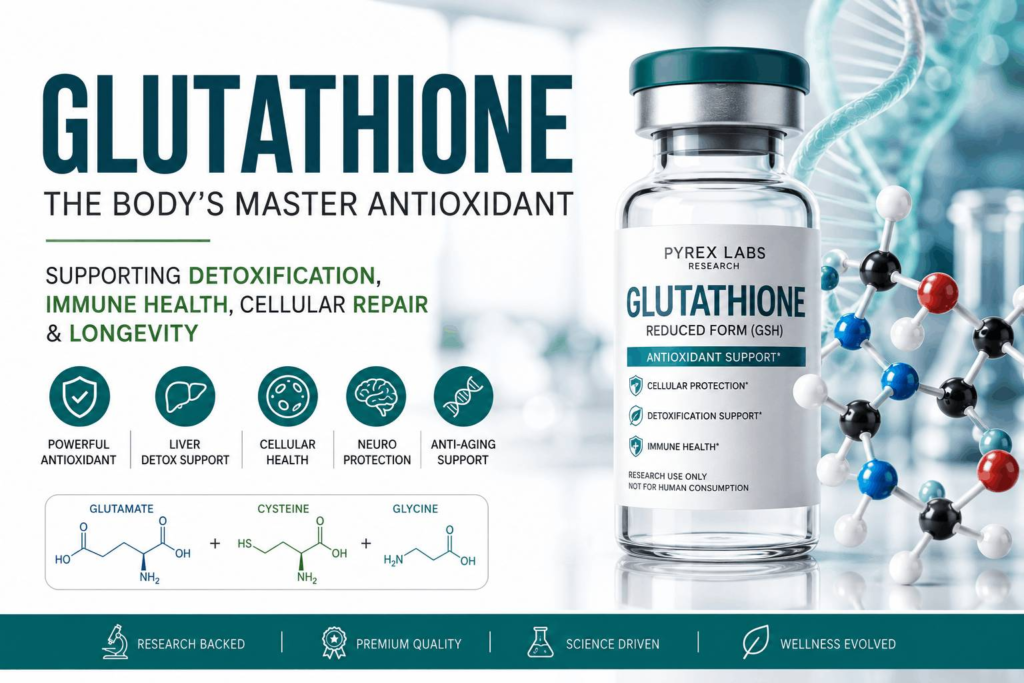
Glutathione is a naturally occurring tripeptide antioxidant found throughout the human body. Research into glutathione dates back to the late 19th century, although its biological importance became much clearer during the 20th century.
Today, glutathione is widely studied for its role in cellular defense, detoxification, immune function, redox balance, and protection against oxidative stress.
II. How Glutathione Works
Glutathione is composed of three amino acids:
- Glutamate
- Cysteine
- Glycine
It exists primarily in two forms: reduced glutathione (GSH) and oxidized glutathione (GSSG).
GSH can donate electrons to reactive molecules, helping neutralize reactive oxygen species and free radicals before they damage proteins, lipids, DNA, and cell membranes. The body also uses glutathione-dependent enzymes, including glutathione peroxidase, as part of its antioxidant defense system.
III. Established Medical Relevance
One of glutathione’s best-established clinical connections is the treatment of acetaminophen overdose. The medication N-acetylcysteine (NAC) is used because it provides cysteine needed to replenish glutathione and helps the liver detoxify the harmful acetaminophen metabolite NAPQI.
CHAPTER 2: PREPARATION & SAFETY CHECKLIST ✅
Before using glutathione supplements—particularly injectable or nebulized preparations—individual health history, medications, allergies, and treatment goals should be reviewed with a qualified healthcare professional.
I. Potential Laboratory Considerations
Depending on the clinical situation, a healthcare professional may consider:
- Liver function tests: ALT, AST, alkaline phosphatase, bilirubin
- Kidney function: creatinine and eGFR
- General metabolic testing: when clinically appropriate
- Glutathione/redox testing: primarily specialized or research-oriented rather than routine screening
There is no universal GSH/GSSG percentage or RBC glutathione target that has been established as a standard safety requirement for routine glutathione supplementation.
II. Medications & Treatments
Glutathione should not automatically be assumed to conflict with medications simply because those medications create oxidative stress.
Special consideration may be appropriate for people undergoing chemotherapy or radiation therapy, since antioxidant supplementation can potentially interact with certain cancer-treatment strategies. Decisions should be made with the treating oncology team.
People taking prescription medications or receiving treatment for chronic conditions should discuss supplementation with their healthcare provider before beginning.
CHAPTER 3: DOSAGE & ADMINISTRATION 💉
Glutathione is available in several forms, including:
- Oral capsules or tablets
- Liposomal preparations
- Topical products
- Nebulized preparations
- Intravenous or injectable formulations in some clinical settings
There is no single universally accepted injectable glutathione protocol for general wellness, anti-aging, skin enhancement, athletic performance, or longevity.
The appropriate dose and route can vary substantially depending on the indication, formulation, medical history, and whether treatment is being medically supervised.
Oral Supplementation
Research has examined oral glutathione supplementation at a variety of doses, but absorption and clinical outcomes can differ between formulations and individuals.
Injectable Glutathione
Injectable or IV glutathione should be administered according to the instructions of a qualified healthcare professional. Sterility, product quality, concentration, route, and individual medical factors are important safety considerations.
Treatment Duration
Rather than assuming everyone requires a fixed 4-, 8-, or 12-week cycle, duration should be determined by the intended purpose, response, tolerability, and available clinical evidence.
CHAPTER 4: WHAT TO EXPECT 🎯
Responses to glutathione supplementation are highly individual.
Some studies have investigated its potential effects on:
- Oxidative-stress biomarkers
- Glutathione status
- Skin pigmentation or appearance
- Metabolic health
- Immune function
- Cellular antioxidant capacity
However, claims that specific improvements will reliably occur during Week 1–2, Week 3–4, Week 5–8, or Week 9–12 are not well established.
Glutathione should therefore be viewed as a biologically important antioxidant rather than a supplement with a guaranteed week-by-week transformation timeline.
CHAPTER 5: POSSIBLE SIDE EFFECTS ⚠️
Glutathione is generally well tolerated in many studied settings, but adverse effects can occur.
Possible effects may include:
Injection-related reactions: Pain, redness, swelling, irritation, bruising, or infection can occur with injectable products.
Gastrointestinal symptoms: Oral supplementation may cause abdominal discomfort, bloating, cramping, or loose stools in some individuals.
Allergic reactions: Hypersensitivity reactions are possible and require medical attention if severe.
Respiratory concerns: Nebulized glutathione may cause bronchospasm in susceptible individuals, particularly those with asthma.
Product-quality risks: Non-approved or improperly compounded injectable products may introduce additional risks involving sterility, contamination, incorrect concentration, or formulation quality.
CHAPTER 6: COMMON MISTAKES 🤦
Assuming Oral Glutathione Has Zero Absorption
Older discussions often suggested that oral glutathione was almost completely destroyed during digestion. Current evidence is more nuanced. Some oral formulations can increase glutathione levels, although absorption varies.
Injecting Too Quickly
Improper injection technique can increase discomfort and local reactions. Injectable products should be used according to professional instructions for the specific formulation.
Shaking Reconstituted Products Aggressively
When a formulation requires reconstitution, follow the manufacturer’s or pharmacy’s handling instructions. Vigorous agitation can potentially affect some sensitive formulations.
Using Discolored or Abnormal Solutions
Injectable products should be inspected according to their official instructions. Unexpected cloudiness, particles, discoloration, damaged packaging, or compromised sterility are reasons not to use the product until it has been evaluated by a pharmacist or healthcare professional.
Assuming More Is Better
Higher antioxidant intake does not automatically produce greater benefits. Excessive supplementation can potentially disrupt normal redox signaling and should not be treated as risk-free.
CHAPTER 7: STOPPING OR DISCONTINUING 🏁
Glutathione is not a hormone and is not generally associated with the type of hypothalamic-pituitary suppression seen with certain hormonal drugs.
For ordinary supplementation, a special tapering schedule is generally not inherently required.
However, someone receiving glutathione as part of a medically supervised treatment plan should follow the discontinuation instructions provided by their healthcare professional.
CHAPTER 8: COMBINATIONS & SUPPORTING NUTRIENTS 🧬
NAC (N-Acetylcysteine)
NAC provides cysteine, an important precursor used by the body to synthesize glutathione.
Vitamin C
Vitamin C participates in the body’s broader antioxidant network and can interact with glutathione-dependent redox processes.
Vitamin E
Vitamin E helps protect cell membranes from lipid oxidation and works within complementary antioxidant pathways.
Selenium
Selenium is required for several antioxidant enzymes, including members of the glutathione peroxidase family.
NAD+
NAD+/NADH and NADP+/NADPH are involved in cellular metabolism and redox chemistry. Their relationship with glutathione reflects interconnected cellular antioxidant and energy systems rather than a proven universal “stack.”
BPC-157
BPC-157 is an experimental peptide. Claims that combining it with glutathione reliably activates NRF2 or produces superior antioxidant effects in humans have not been established by high-quality clinical evidence.
CHAPTER 9: GLUTATHIONE & MAJOR HEALTH CONDITIONS 🏥
Cardiovascular Disease
Oxidative stress is involved in cardiovascular disease, and glutathione contributes to normal antioxidant defense. However, glutathione supplementation should not be presented as an established treatment for coronary artery disease or vascular disease.
Stroke & Neurological Health
Glutathione plays an important role in protecting cells—including neurons—from oxidative stress. Researchers continue to investigate glutathione metabolism in neurological and cerebrovascular disorders, but supplementation is not an established substitute for stroke prevention or treatment.
Cancer
Glutathione biology is particularly complex in cancer. Healthy cells use glutathione for protection, but some cancer cells can also exploit antioxidant systems to survive treatment.
For this reason, people undergoing cancer treatment should not independently add high-dose antioxidant therapy without discussing it with their oncology team.
Diabetes & Metabolic Health
Abnormal oxidative stress and glutathione metabolism have been observed in diabetes and insulin resistance. Research continues into whether modifying glutathione status can improve metabolic outcomes, but glutathione should not replace established diabetes treatment.
Respiratory Health
Glutathione is naturally present in the respiratory tract’s epithelial lining fluid and contributes to antioxidant defense. Nebulized glutathione has been investigated for certain respiratory applications, but evidence varies by condition and bronchospasm can occur in susceptible individuals.
CHAPTER 10: SUMMARY 📝
Glutathione is one of the body’s most important endogenous antioxidant molecules. Made from glutamate, cysteine, and glycine, it contributes to cellular redox balance, antioxidant defense, detoxification pathways, immune processes, and protection against oxidative damage.
Its biological importance is well established, but that does not mean every commercial claim surrounding glutathione supplementation has been clinically proven.
The strongest approach is to separate glutathione’s established biology from emerging or experimental applications. Oral, liposomal, nebulized, topical, and injectable preparations have different evidence, absorption characteristics, and safety considerations.
Glutathione remains an important area of research involving oxidative stress, cellular health, liver function, metabolic health, aging, neurological disease, respiratory health, and other conditions.
⚠️ Disclaimer: This material is provided for educational and informational purposes only. It is not medical advice, diagnosis, or a personalized treatment or dosing recommendation. Injectable, IV, or nebulized products may carry additional risks and should be used only under appropriate professional guidance. Consult a qualified healthcare professional before starting, stopping, combining, or changing medications, supplements, peptides, or other therapies.