Tesamorelin
$59.95 – $89.95Price range: $59.95 through $89.95
- Buy 5+ of each and save 5%
- Buy 10+ of each and save 8%
- Product is sold in powder form, needs reconstitution before use. Please read more on our FAQ page.
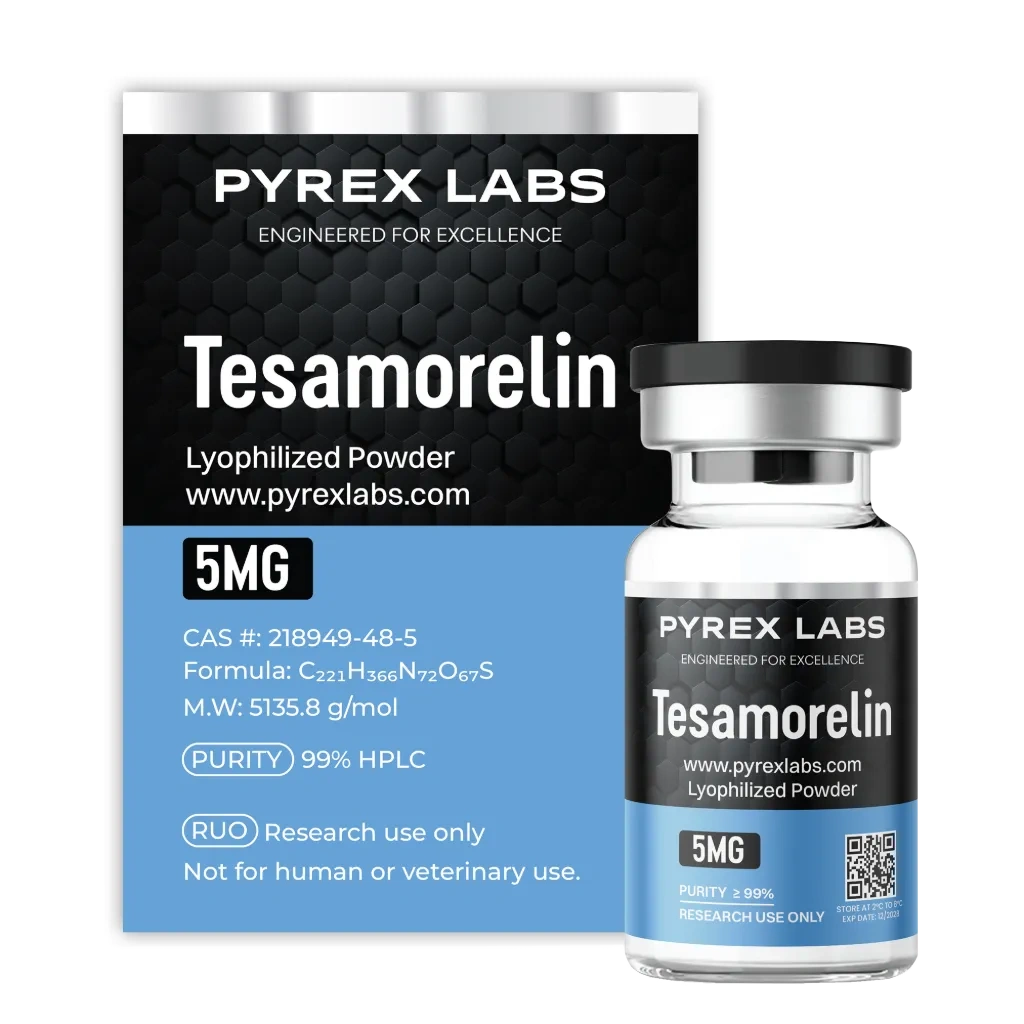
Tesamorelin is a synthetic analog of growth hormone-releasing hormone (GHRH), widely used in laboratory research to investigate endocrine signaling and metabolic regulation. Its stabilized peptide sequence makes it a valuable tool for experimental studies examining growth hormone secretion and downstream metabolic pathways.
SHARE:
SHARE:
- Products sold on our website are designed for in vitro testing and lab experimentation exclusively.
- All the products you see on the website are being sold in a lyophilized powder state (freeze-dried), in a sealed sterile vial; and should be reconstituted.
- The product’s label clearly states the amount of product a vial contains; some products are offered in different variations.
- The products we are selling come in a sealed vial but require additional lab equipment for proper testing.
AVAILABILITY:
- Ships today if you order and pay by 12 PM CST
- Some product may take up to 72 hours to ship
- Backordered items will ship in 3-5 days
Tesamorelin peptide is a synthetic growth hormone-releasing hormone (GHRH) analog commonly studied in laboratory environments investigating endocrine signaling pathways and growth hormone regulation. The compound is designed to interact with GHRH receptors, which may stimulate the release of growth hormone within controlled experimental models.
Tesamorelin consists of a stabilized peptide sequence developed to mimic endogenous GHRH activity while maintaining improved stability for laboratory research applications. This structural design allows scientists to examine hormone signaling pathways under controlled experimental conditions.
Research Background
Tesamorelin has been the subject of extensive biochemical and endocrinology research due to its interaction with receptors responsible for growth hormone signaling. Laboratory investigations often examine how GHRH analogs influence hormone secretion pathways and metabolic regulatory mechanisms.
Researchers frequently explore tesamorelin peptide when studying metabolic pathways, hormone signaling mechanisms, and peptide–receptor interactions. Due to its structural similarity to naturally occurring growth hormone-releasing hormone, the compound has been widely referenced in endocrinology and peptide research literature.
Studies involving tesamorelin peptide commonly explore the peptide’s interaction with pituitary receptors and its role in endocrine system signaling. Because the compound closely resembles naturally occurring GHRH, it is frequently utilized in controlled laboratory studies focused on peptide activity and receptor binding.
Growth hormone-releasing hormone analogs have been widely documented in endocrine research literature and are often investigated to better understand hormonal regulation processes and peptide signaling behavior. Researchers studying growth hormone signaling pathways often compare tesamorelin peptide with other laboratory compounds such as BPC-157 and TB-500.
Product Format & Quality Assurance
Each vial of tesamorelin supplied by Full Scale Peptides is prepared for laboratory research purposes and undergoes analytical verification procedures prior to distribution. Researchers often rely on documented purity verification when selecting peptide compounds for experimental study.
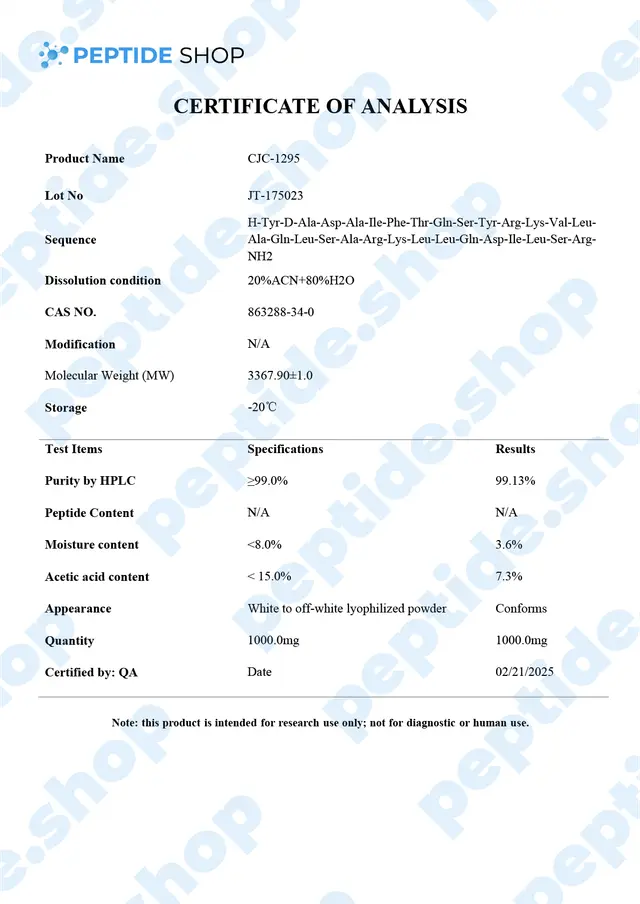
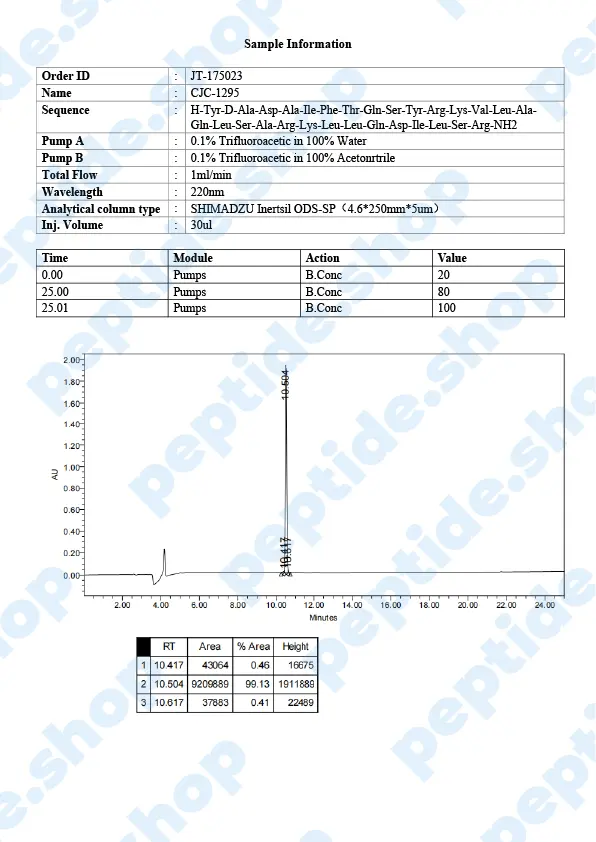
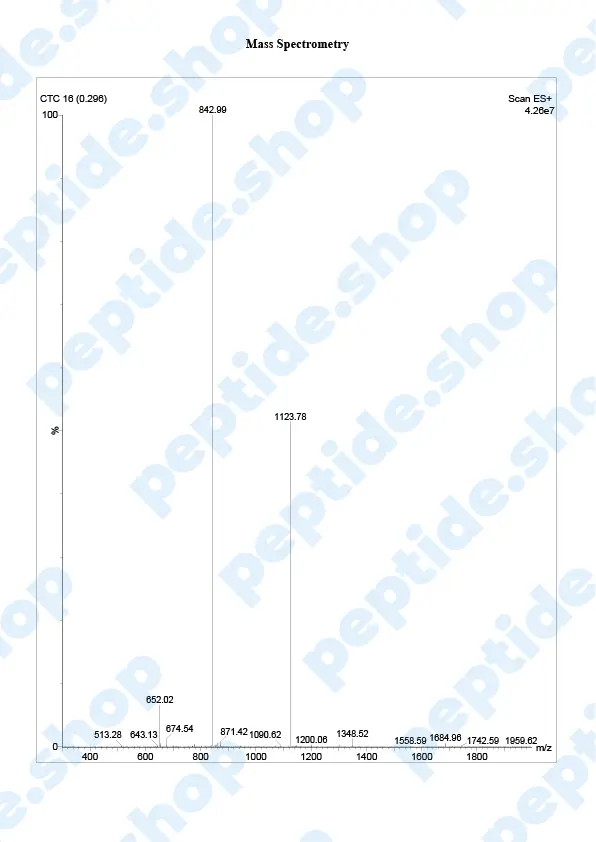
All tesamorelin peptide research compounds undergo analytical verification prior to distribution. Third-party laboratory testing procedures are used to confirm peptide purity, batch consistency, and compound identity.
Typical verification methods include:
-
High-Performance Liquid Chromatography (HPLC) for purity analysis
-
Mass spectrometry for molecular profile confirmation
-
Batch-specific Certificates of Analysis (COA) providing documentation of laboratory verification results and transparency regarding analytical testing procedures
Researchers depend on documented purity verification when selecting peptide suppliers for laboratory experimentation involving synthetic peptide compounds.
Laboratory Handling Guidelines
Reconstitution
Tesamorelin peptide is typically supplied in lyophilized (freeze-dried) form to maintain compound stability during storage and transport. Within laboratory environments, researchers commonly reconstitute lyophilized peptides using bacteriostatic water or sterile laboratory solvents.
Proper reconstitution procedures are important for maintaining peptide stability and ensuring accurate concentration measurements during experimental procedures. Researchers should always follow established laboratory protocols when preparing peptide solutions for analytical use.
Stability Considerations
Like many peptide compounds, tesamorelin research peptides are sensitive to environmental conditions including temperature fluctuations, light exposure, and repeated freeze–thaw cycles. Maintaining controlled laboratory environments helps preserve peptide integrity during experimental procedures.
Lyophilized peptide compounds generally exhibit greater stability prior to reconstitution when stored properly. Researchers commonly handle peptide solutions carefully to maintain analytical consistency throughout experimental applications.
Storage Guidelines
Tesamorelin peptide should be stored under controlled laboratory conditions to maintain compound stability and integrity.
Lyophilized Powder:
-
Store in a cool, dry environment
-
Protect from excessive light exposure
-
For extended storage, maintain in laboratory freezers at approximately -20°C
After Reconstitution:
-
Store peptide solutions under refrigeration
-
Minimize repeated freeze–thaw cycles
Maintaining appropriate laboratory storage conditions helps preserve peptide purity and structural stability during research studies.
Frequently Asked Questions
What is Tesamorelin peptide used for in research? Tesamorelin peptide is commonly studied in laboratory environments exploring growth hormone signaling and endocrine regulation pathways.
How is Tesamorelin supplied for laboratory research? Tesamorelin is typically provided in lyophilized powder form to maintain stability prior to reconstitution.
How should Tesamorelin peptide be stored? Researchers generally store lyophilized peptide compounds in cool, dry environments or laboratory freezers at approximately -20°C for long-term stability.
Research Use Notice
All compounds supplied by Full Scale Peptides are intended strictly for laboratory research use only. These materials are not intended for human consumption, medical use, or diagnostic purposes. Products are supplied exclusively to qualified professionals, institutions, and laboratories engaged in scientific research.
Researchers are responsible for handling peptide compounds in accordance with established laboratory safety protocols and regulatory guidelines applicable to their research environment.