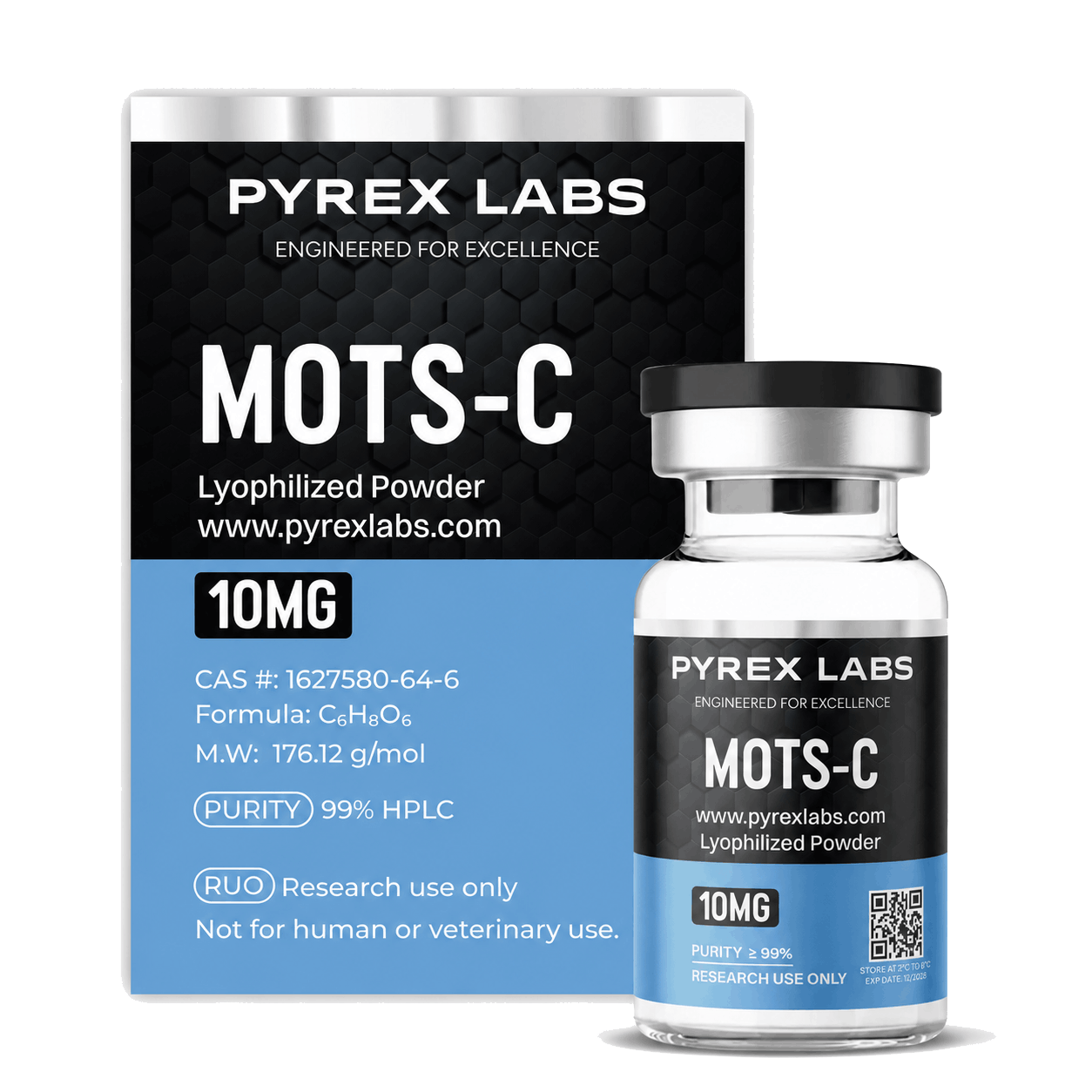
MOTS-C
$59.95
- Buy 5+ of each and save 5%
- Buy 10+ of each and save 8%
- Product is sold in powder form, needs reconstitution before use. Please read more on our FAQ page.
MOTS-c (Mitochondrial ORF of the Twelve S rRNA-c) is a naturally occurring mitochondrial-derived peptide from Pyrex Labs. Unlike traditional signaling molecules encoded by nuclear DNA, MOTS-c originates within the mitochondria and functions as a mitochondrial hormone — directly communicating mitochondrial status to the rest of the cell.
The peptide activates AMPK via folate cycle inhibition and AICAR accumulation, promoting glucose uptake, fatty acid oxidation, and mitochondrial biogenesis. It then translocates to the nucleus to regulate antioxidant response genes. Research interests include metabolic disorders, insulin sensitivity, obesity, cardioprotection, inflammation, and age-related conditions.
Each 5mg vial contains lyophilized powder tested to ≥95% purity by HPLC, with sequence confirmed by mass spectrometry.
SHARE:
SHARE:
- Products sold on our website are designed for in vitro testing and lab experimentation exclusively.
- All the products you see on the website are being sold in a lyophilized powder state (freeze-dried), in a sealed sterile vial; and should be reconstituted.
- The product’s label clearly states the amount of product a vial contains; some products are offered in different variations.
- The products we are selling come in a sealed vial but require additional lab equipment for proper testing.
AVAILABILITY:
- Ships today if you order and pay by 12 PM CST
- Some product may take up to 72 hours to ship
- Backordered items will ship in 3-5 days
MOTS-c (Mitochondrial ORF of the Twelve S rRNA-c) is a naturally occurring mitochondrial-derived peptide (MDP) encoded by the mitochondrial genome . Unlike traditional signaling molecules encoded by nuclear DNA, MOTS-c originates within the mitochondria and functions as a mitochondrial hormone — bridging mitochondrial health with systemic metabolic regulation .
Discovered only in recent years, this 16-amino acid peptide has emerged as a significant regulator of metabolic homeostasis, insulin sensitivity, and cellular stress responses. MOTS-c levels naturally decline with age, correlating with increased susceptibility to metabolic syndrome and age-related muscle loss .
Each 5mg vial contains lyophilized powder tested to ≥95% purity by HPLC, with sequence confirmed by mass spectrometry.
Key Research Applications
-
Metabolic Research: Investigated for enhancing glucose metabolism, improving insulin sensitivity, and reducing obesity in preclinical models
-
Mitochondrial Bioenergetics: Shown to improve intrinsic mitochondrial function and efficiency through PGC-1α and AMPK-dependent pathways
-
Cardioprotection Studies: Explored for protective effects against diabetic cardiomyopathy, ischemia-reperfusion injury, and hypoxia/reoxygenation-induced myocardial cell damage
-
Oxidative Stress Research: Demonstrates ability to reduce mitochondrial ROS emission and activate antioxidant response elements (AREs) via nuclear translocation
-
Inflammation Studies: Investigated for anti-inflammatory effects through HMGB1/TLR4/NF-kB pathway modulation
-
Aging & Longevity Research: Examined for potential therapeutic applications in age-related conditions including sarcopenia and macular degeneration
Mechanism of Action
MOTS-c exerts its biological effects through several well-characterized pathways:
AMPK Activation: MOTS-c inhibits the folate cycle, reducing de novo purine biosynthesis and leading to accumulation of AICAR — an endogenous AMPK activator . This results in enhanced AMPK phosphorylation (Thr172), promoting glucose uptake, fatty acid oxidation, and mitochondrial biogenesis .
Nuclear Translocation: In response to metabolic stress, MOTS-c translocates to the nucleus where it binds to antioxidant response elements (AREs) in promoter regions of genes such as HMOX1 and NQO1, directly regulating nuclear gene expression and increasing cellular resistance to metabolic stress .
PGC-1α Pathway: MOTS-c upregulates PGC-1α (peroxisome proliferator-activated receptor gamma coactivator 1-alpha), a master regulator of mitochondrial biogenesis, along with downstream targets NRF-1 and TFAM .
mTORC2/AKT Signaling: The peptide promotes AKT phosphorylation via mTORC2 activation and PTEN inhibition, reducing FOXO1 activity and decreasing MSTN (myostatin) levels to support skeletal muscle growth .
Specifications
| Specification | Detail |
|---|---|
| Product | MOTS-c (Mitochondrial ORF of the 12S rRNA-c) |
| Sequence | Met-Arg-Trp-Gln-Glu-Met-Gly-Tyr-Ile-Phe-Tyr-Pro-Arg-Lys-Leu-Arg |
| Molecular Formula | C₁₀₁H₁₅₂N₂₈O₂₂S₂ |
| Molecular Weight | ~2288.6 Da |
| Amino Acids | 16 residues |
| Form | Lyophilized white powder, sealed glass vial |
| Purity | ≥95% (HPLC) |
| Solubility | Water / Bacteriostatic water |
| Origin | Synthesized in the USA |
| Storage (lyo) | −20°C, desiccated, protected from light |
| Storage (reconstituted) | 2–8°C short term; aliquot at −20°C for long term |
| Intended use | Laboratory and in-vitro research only |
Reconstitution Guidance
Reconstitute MOTS-c with sterile water or bacteriostatic water (0.9% benzyl alcohol) for research use. Direct diluent gently down the inner wall of the vial rather than onto the lyophilized cake. Swirl slowly until fully dissolved — do not shake.
Choose a reconstitution volume that matches your experimental protocol. Many investigators use 0.5-2 mL per vial to achieve working concentrations. For best results, aliquot the reconstituted solution into single-use tubes immediately to avoid repeated freeze-thaw cycles.
Storage & Stability
Before Reconstitution: Store the unopened, lyophilized vial at −20°C in a desiccated, light-protected environment. Stable under these conditions for the shelf-life indicated on the certificate of analysis.
After Reconstitution: Store working solutions at 2–8°C for short-term use (up to 7-14 days). For long-term storage, prepare single-use aliquots and freeze at −20°C. Avoid repeated freeze-thaw cycles, which significantly degrade peptide activity.
Quality Assurance
Every lot of MOTS-c undergoes comprehensive release testing against internal specifications, including:
-
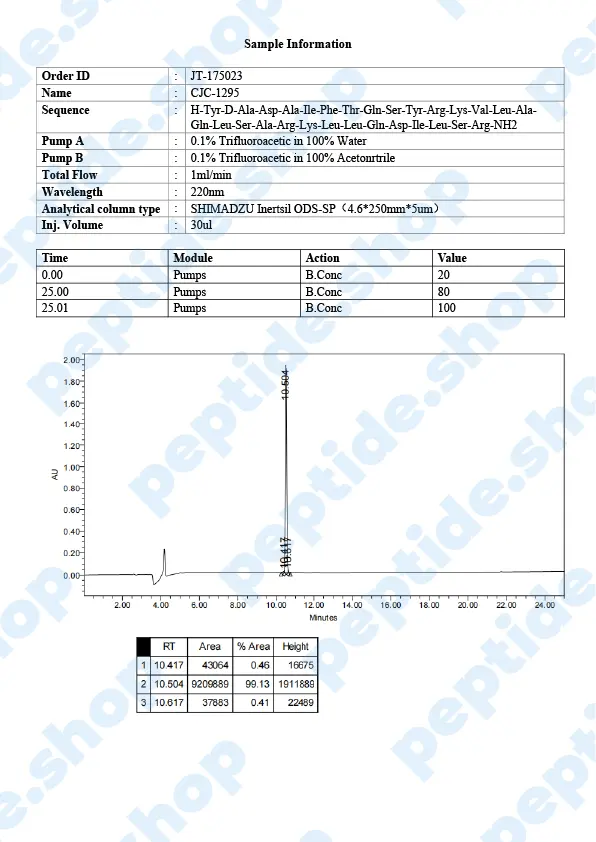
HPLC for purity confirmation (≥95%)
-
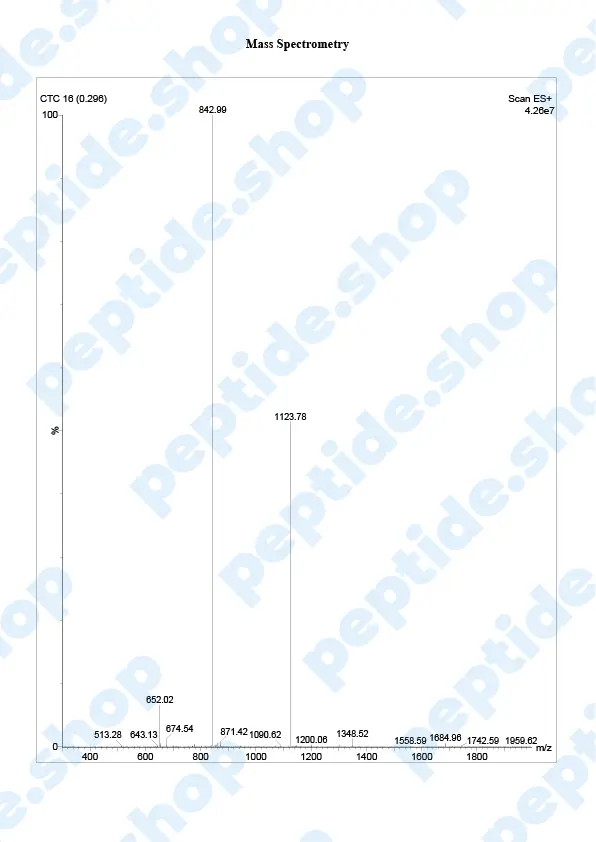
Mass spectrometry for identity verification
-
Visual inspection of vial integrity
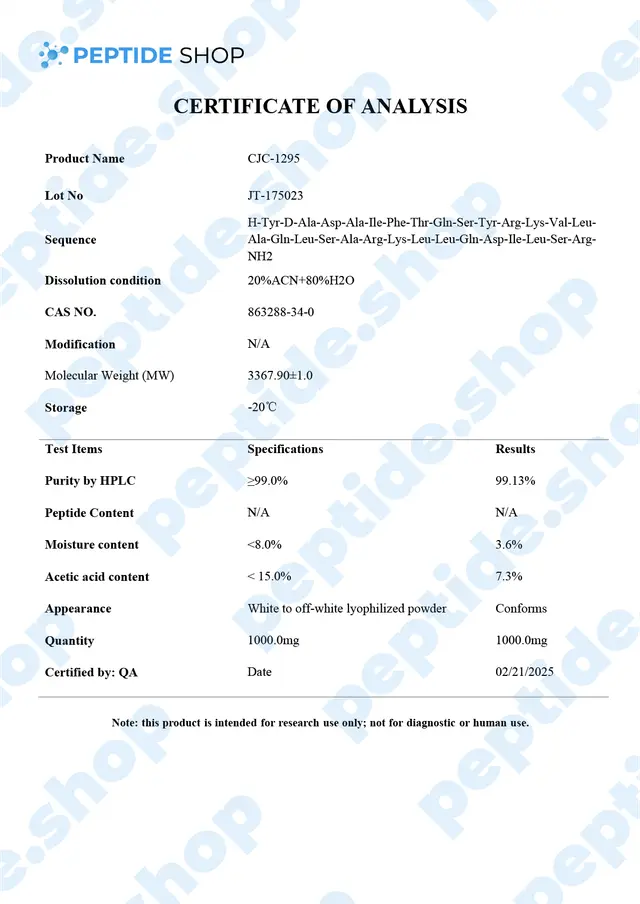
Each vial is coded with a lot number that links directly to release testing documentation. A lot-specific Certificate of Analysis (COA) is available upon request.
Important Research Notes
Discovery Context: MOTS-c was identified as a novel mitochondrial-derived peptide encoded by the 12S rRNA region of mitochondrial DNA, expanding the known genetic repertoire of the mitochondria beyond the traditional 37 genes . It belongs to a class of mitochondrial signaling molecules that includes Humanin and other MDPs.
Clinical Significance: Serum MOTS-c levels have been investigated as potential biomarkers. In one clinical study, changes in MOTS-c levels within 24 hours post-cardiopulmonary bypass outperformed traditional biomarkers in predicting acute respiratory distress syndrome (ARDS) incidence .
Exercise Connection: MOTS-c is induced in response to exercise and metabolic stress. Due to its performance-enhancing potential, it has been added to the World Anti-Doping Agency (WADA) Prohibited List .
Published Research Doses (For Reference):
-
In vitro studies have utilized concentrations ranging from 500 nM to 10 µM
-
In vivo rodent studies have used intraperitoneal doses of 0.5-50 mg/kg depending on the model
Related Products from Pyrex Labs
Researchers who order MOTS-c frequently also purchase:
-
Humanin – Another mitochondrial-derived peptide for cytoprotection studies
-
SS-31 (Elamipretide) – Mitochondria-targeted antioxidant peptide
-
MOTS-c (5mg) – Additional vial quantity
-
BPC-157 – For tissue repair research
Frequently Asked Questions
What does MOTS-c stand for? MOTS-c stands for “Mitochondrial ORF of the Twelve S rRNA-c” — referencing its origin in the mitochondrial 12S rRNA region.
How is MOTS-c different from other peptides? Unlike most peptides encoded by nuclear DNA, MOTS-c is encoded by mitochondrial DNA. It represents a newly discovered class of mitochondrial hormones that allow mitochondria to directly communicate with the nucleus and regulate cellular metabolism .
What is the primary mechanism of MOTS-c? MOTS-c activates AMPK via AICAR accumulation, then translocates to the nucleus to regulate expression of antioxidant and metabolic genes .
What research areas are investigating MOTS-c? Current research includes metabolic disorders (diabetes, obesity), cardiovascular disease, aging/longevity, neuroprotection, inflammation, and age-related conditions such as macular degeneration and sarcopenia .
Is MOTS-c approved for human use? No. This product is for research purposes only and is not FDA-approved for human consumption, medical treatment, or veterinary applications. MOTS-c is listed on the WADA Prohibited List.
Do you provide a Certificate of Analysis? Yes. A lot-specific COA is available upon request for every vial shipped.